Working from home can feel like a dream come true: no commute, more flexibility, and you can wear comfy clothes all day. But once the “new” feeling is gone, many people notice how easy it is to get distracted, lose motivation, or work way longer than planned.
I’ve been working from home since 2015, so I’ve learned (sometimes the hard way) what helps you stay productive—and what makes things worse. If you’re new to WFH or your routine feels messy right now, these 10 practical, self-tested tips will help you create a workday that actually works.
Key Takeaways
-
Keep a consistent start and end time to protect your focus and your free time.
-
Set up a dedicated workspace (even a small corner) so your brain switches into “work mode.”
-
Plan realistically (Top 3 priorities), take real breaks (lunch away from the desk + short movement breaks), and drink enough water.
-
Avoid “quick” chores during work hours—they break your concentration more than you think.
1. Set your start time: get up at your usual time
One of the biggest productivity killers is starting the day “whenever.” When you get up at a different time every day, your brain never really switches into work mode.
Try to get up at your usual time—even if your commute is now only a few steps. Use the extra minutes for something that makes you feel good: a calm breakfast, a short stretch, journaling, or simply getting ready without rushing. If you prefer the same morning routine as before, just set your alarm so you’re at your desk at your normal work start time.
2. Fuel your focus: eat a healthy breakfast
Skipping breakfast (or eating while working) sounds efficient, but it often backfires. Once you get hungry, your concentration drops—and suddenly the fridge becomes your most visited “coworker.”
A simple, healthy breakfast can keep you steady for hours. My go-to is cereal or porridge with fruit. And yes, coffee is part of the routine too. The goal isn’t perfection—it’s giving your brain fuel so you can focus.
3. Dress for the day (yes, even at home)
Changing out of pajamas is a small action with a big impact. Getting dressed tells your brain: “Now we work.”
You don’t need business attire, but I recommend real clothes—something comfortable that still feels like “day mode.” If you have video calls, this gets even easier (and you’ll feel more confident showing up on camera). A little effort here often leads to a more productive mindset.
4. Create boundaries: start and end work on time
When you work from home, the boundaries can disappear quickly. Without a commute, it’s easy to start earlier, take shorter breaks, and keep working late—without even noticing.
Pick a clear start and end time, and stick to it as much as possible. A simple closing ritual helps: write down what you’ll do tomorrow, shut your laptop, and leave your workspace. Even a short walk around the block can create that “commute feeling” that separates work from personal time.
5. Work from a designated workspace
Working at the kitchen table is okay for a day or two. Long-term, it can make it harder to focus and harder to relax—because everything blends together.
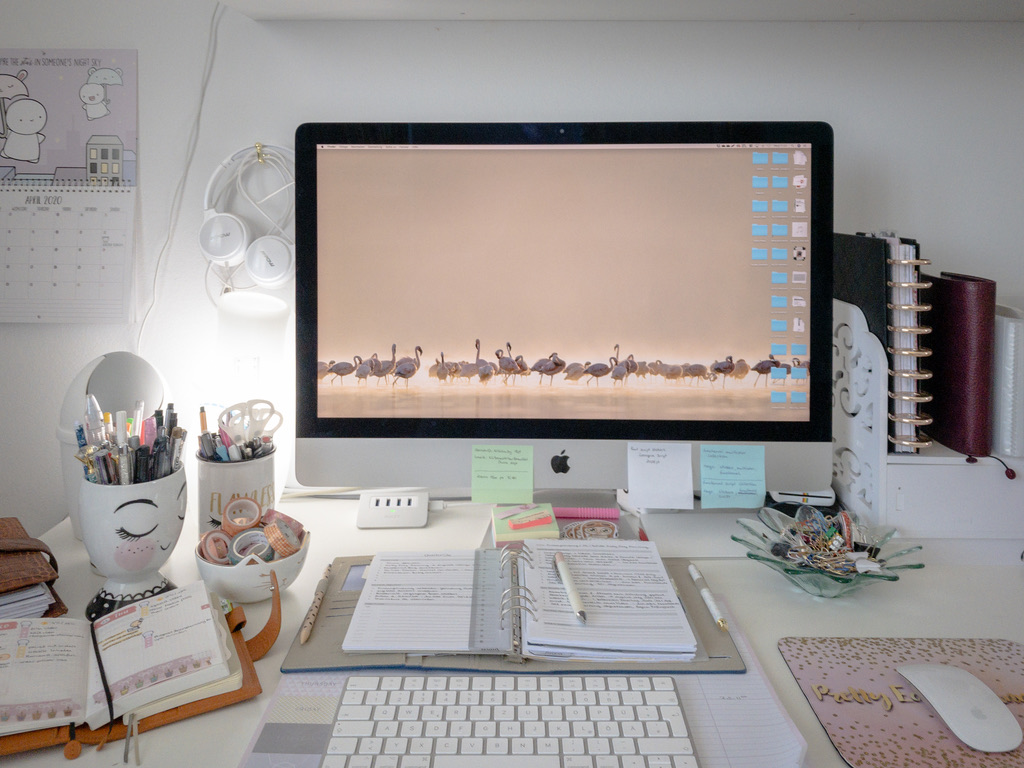
If possible, create a designated work area. That can be a separate room, a small desk in the corner, or a tidy spot that you only use for work. Bonus tip: keep the essentials nearby (charger, notebook, water bottle, headphones). The fewer reasons you have to get up “just for a second,” the fewer distractions you’ll invite in.
6. Plan your day (and keep it realistic)
Yes, planning matters—especially at home. But planning doesn’t mean creating a huge to-do list that makes you feel behind before you even start.
What helps me most is focusing on the top three things I want to accomplish today. These are the tasks that make the day feel successful. Everything else is a bonus.
If you want more structure, you can also time-block your day (for example: deep work in the morning, admin tasks in the afternoon). But even a simple list of 3 priorities can be enough to stay productive.
7. Don’t do home chores during work hours
Laundry, dishes, cleaning… they’re always there. And they’re tempting because “it only takes 2 minutes.” But those two minutes add up—and they break your focus.
A helpful rule: during work hours, treat your home like an office. You wouldn’t do laundry at work, so don’t do it at home either. If you do want to use breaks for a quick task, plan it intentionally (for example: unload the dishwasher during your lunch break). Otherwise, save chores for after work.
8. Take a real lunch break away from your desk
Eating at your desk often turns lunch into “half break, half work,” which doesn’t recharge you.
Try to eat at the dining table (or anywhere that’s not your workspace). Keep it light and simple, and give your brain a real pause. Personally, I like to do a quick 10–15 minute tidy at the end of lunch (like dishes or a fast reset), but I avoid spreading chores throughout the day—because that makes it harder to get back into focus.
9. Move your body: short breaks each hour
In an office, you naturally move more: walking to a meeting room, grabbing coffee, talking to coworkers. At home, you can sit for hours without noticing.
Set a simple goal: a short 2-minute break every hour. Stand up, stretch, refill your water, or walk through your apartment. These micro-breaks help your body and your mind—and they often improve your focus when you sit back down.
10. Stay hydrated
Hydration sounds almost too simple, but it matters. When you’re dehydrated, you get tired, your focus drops, and everything feels harder.
Make it easy: keep a water bottle on your desk. Create refill triggers (for example: refill after every meeting, or every time you make coffee). Staying hydrated is one of the easiest ways to support your concentration during the day.
Conclusion
Working from home can be amazing—if you build a routine that supports you. To recap, the 10 tips are: keep your usual start time, eat breakfast, get dressed, set boundaries, work from a designated space, plan your day, avoid chores during work time, take a real lunch break, move regularly, and drink enough water.
Don’t try to change everything at once. Pick one or two tips to start with this week and build from there.
Quick checklist
- Get up at your usual time
- Eat a healthy breakfast
- Get dressed for the day
- Start and end work at your usual time
- Work from a designated workspace
- Plan your day (Top 3 priorities)
- Avoid home chores during work hours
- Take a real lunch break away from your desk
- Take short movement breaks each hour
- Stay hydrated
FAQ / Troubleshooting
What if I have kids at home?
Keep your plan realistic: shorter focus blocks, clear “quiet time” signals, and flexible expectations. Even one strong work block per day can be a win.
What if I don’t have space for an office?
A small “work corner” works too. The key is consistency: same spot, same setup, same start/stop routine.
What if I lose motivation midday?
Try a reset: drink water, take a 5-minute walk, and choose one small task to restart momentum.
Which tip will you try this week? And do you have a favorite work-from-home habit that helps you stay productive?