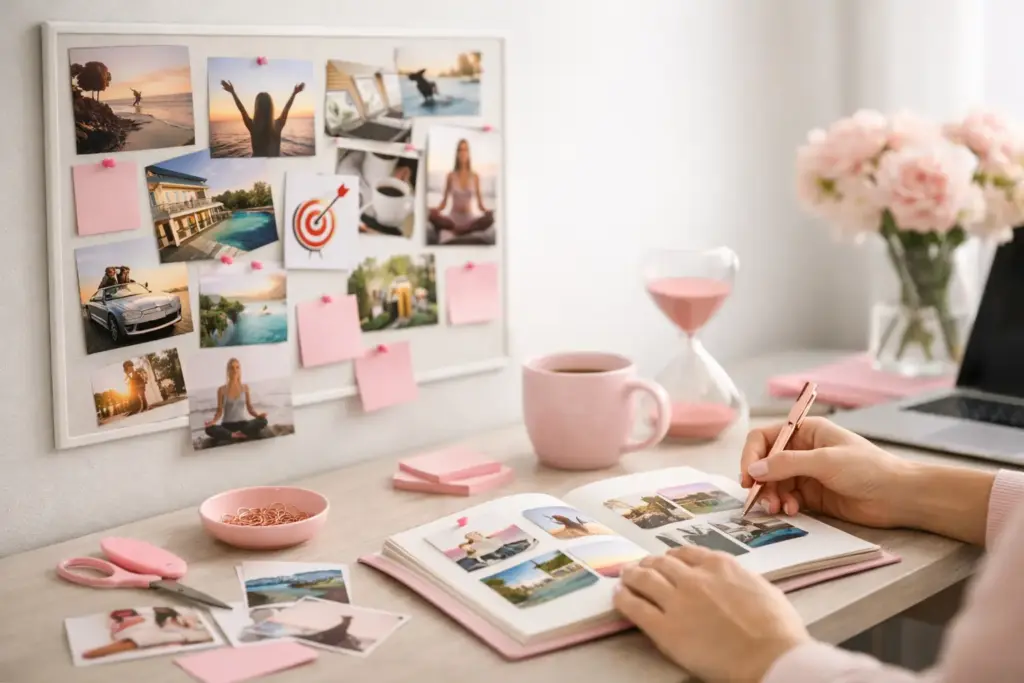
Some vision boards look beautiful for about a week, then disappear into the background like wall art. If you want a vision board for goal execution, it needs to do more than inspire you. It needs to help you choose what matters, track what happens next, and stay connected to your planner instead of floating somewhere outside your routine.
Paper planners are especially good at this because they turn big ideas into visible, repeatable action. You are not just collecting pretty images or motivational quotes. You are building a tool that keeps your goals close enough to use.
Key Takeaways
-
A vision board for goal execution should connect directly to your planner and your weekly decisions.
-
The best boards focus on a few clear goals, not every dream at once.
-
Categories, action prompts, and planner inserts help turn inspiration into follow-through.
-
Size and layout matter because a board only works if you see it often and can actually use it.
-
Review your board regularly and adjust it when your priorities change.
What makes a vision board useful instead of decorative
A traditional vision board often centers on aspiration. That can feel exciting at first, but excitement alone does not carry a goal through busy workweeks, appointments, family logistics, and low-energy days. Execution needs structure.
A useful board gives every image, word, or prompt a job. Instead of adding a generic photo of a tidy home, you might connect it to one specific goal like creating a 15-minute evening reset routine. Instead of pinning a vacation image with no plan behind it, you might label it with a savings target and a booking timeline.
That shift matters. When your board reflects actions, checkpoints, and timing, it stops being wishful and starts becoming practical. This is where planner users have a real advantage. You already know how to break a year into months, a month into weeks, and a week into doable steps.
How to build a vision board for goal execution
Start smaller than you think. Most people lose momentum because they try to represent an entire ideal life on one page. A stronger approach is to choose three to five active goals for the season, quarter, or year. That gives your board enough focus to guide decisions without feeling crowded.
Step 1: Choose goals that are ready for action
Pick goals you truly want to work on now, not someday goals you enjoy imagining. A goal like improve my health is too broad to execute. A goal like walk four times a week, prep lunches on Sunday, or schedule annual appointments gives you something to act on.
If you use a yearly overview in your planner, this is a great place to identify your focus areas. You might choose one personal goal, one home goal, one work goal, and one financial goal. That mix often feels balanced and realistic.
Step 2: Match each goal with visual cues and written prompts
Images still have value, but they work better when they support a clear message. Add pictures, colors, or words that instantly remind you what success looks like. Then pair them with a short action prompt.
For example, if your goal is to read more, your visual could be a cozy reading corner or a stack of books. Your written prompt could say read 20 minutes before bed, track books finished monthly, or keep one book in your bag. Now your board points toward behavior, not just mood.
This is also where planner lovers can have fun with layout. You can create blocks, sections, or mini dashboards for each goal category. A clean structure usually works better than a crowded collage because it gives your eyes a place to land.
Step 3: Keep the board in your planner system
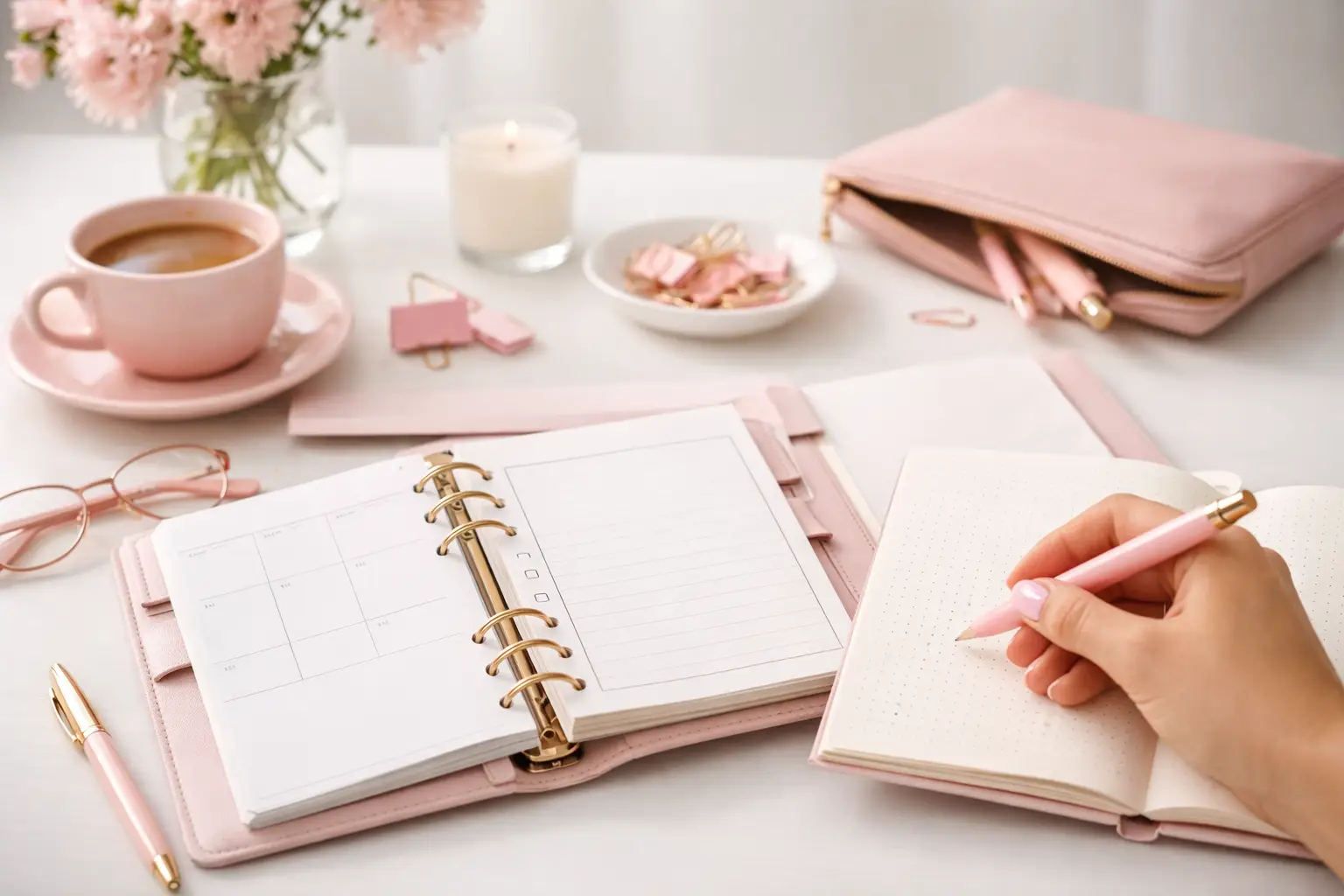
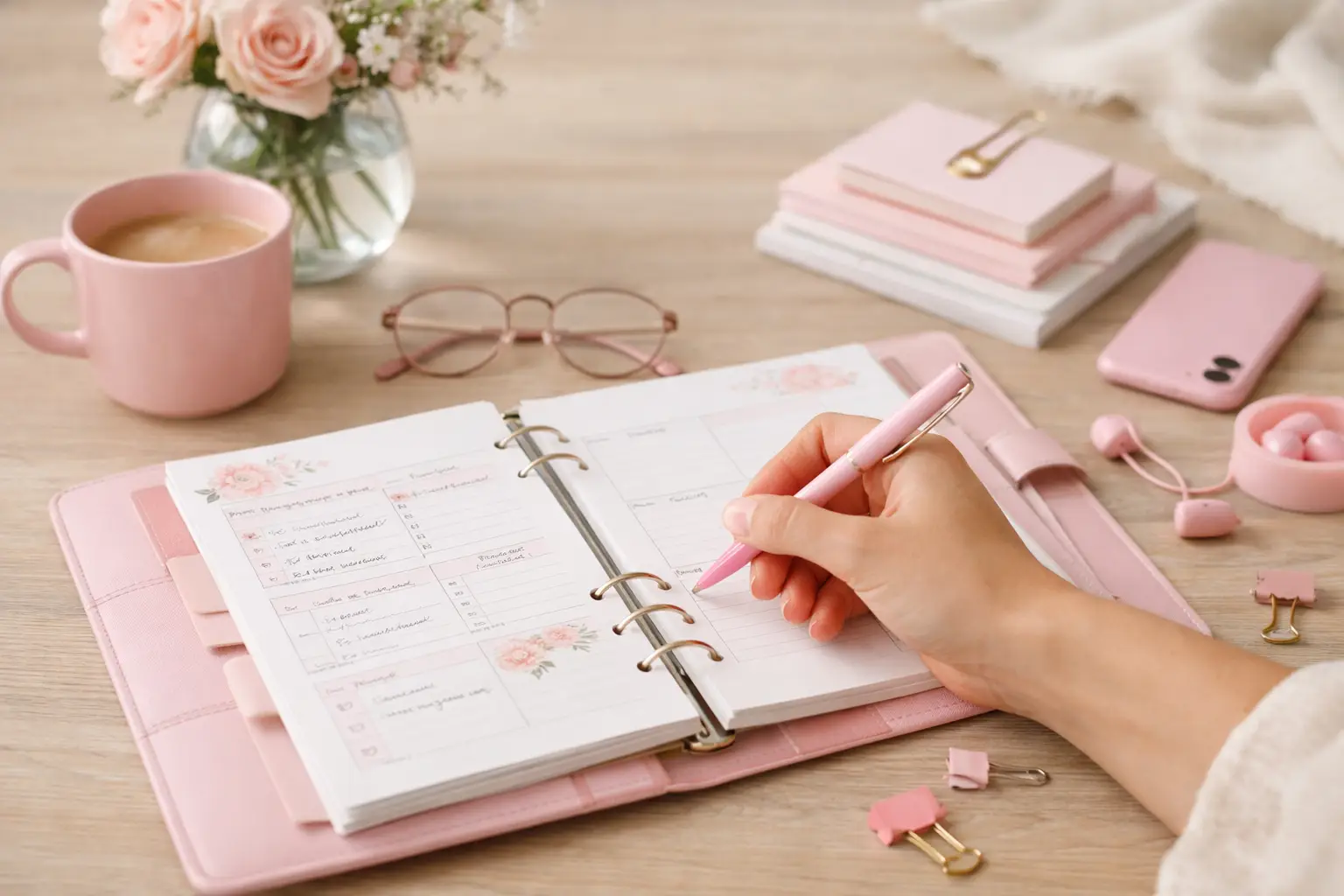
If your board lives on a wall across the room, it might inspire you occasionally. If it lives inside your planner, clipped into your current section, or placed as a dashboard you see every day, it becomes part of your workflow.
That is a major difference. Visibility drives follow-through.
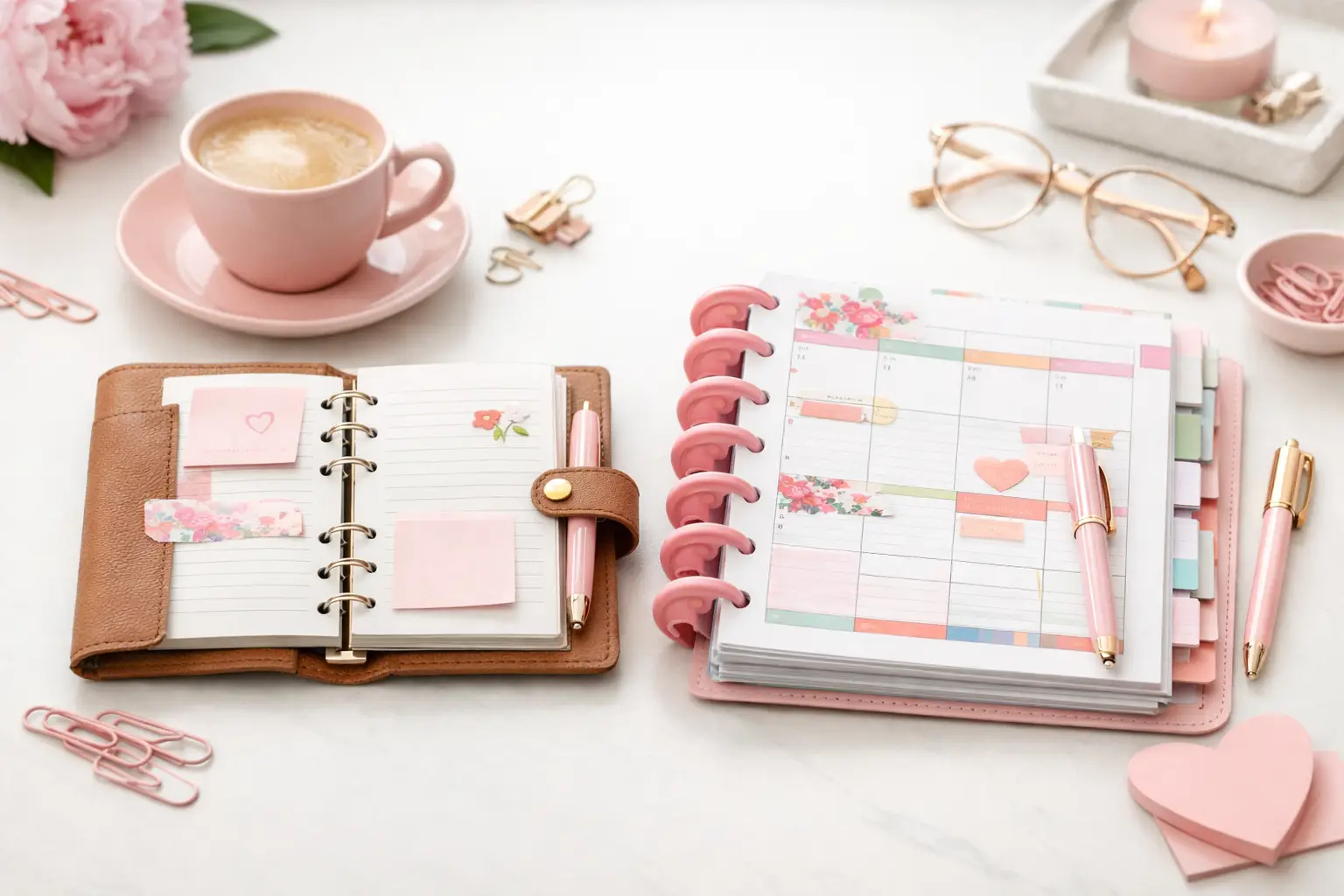
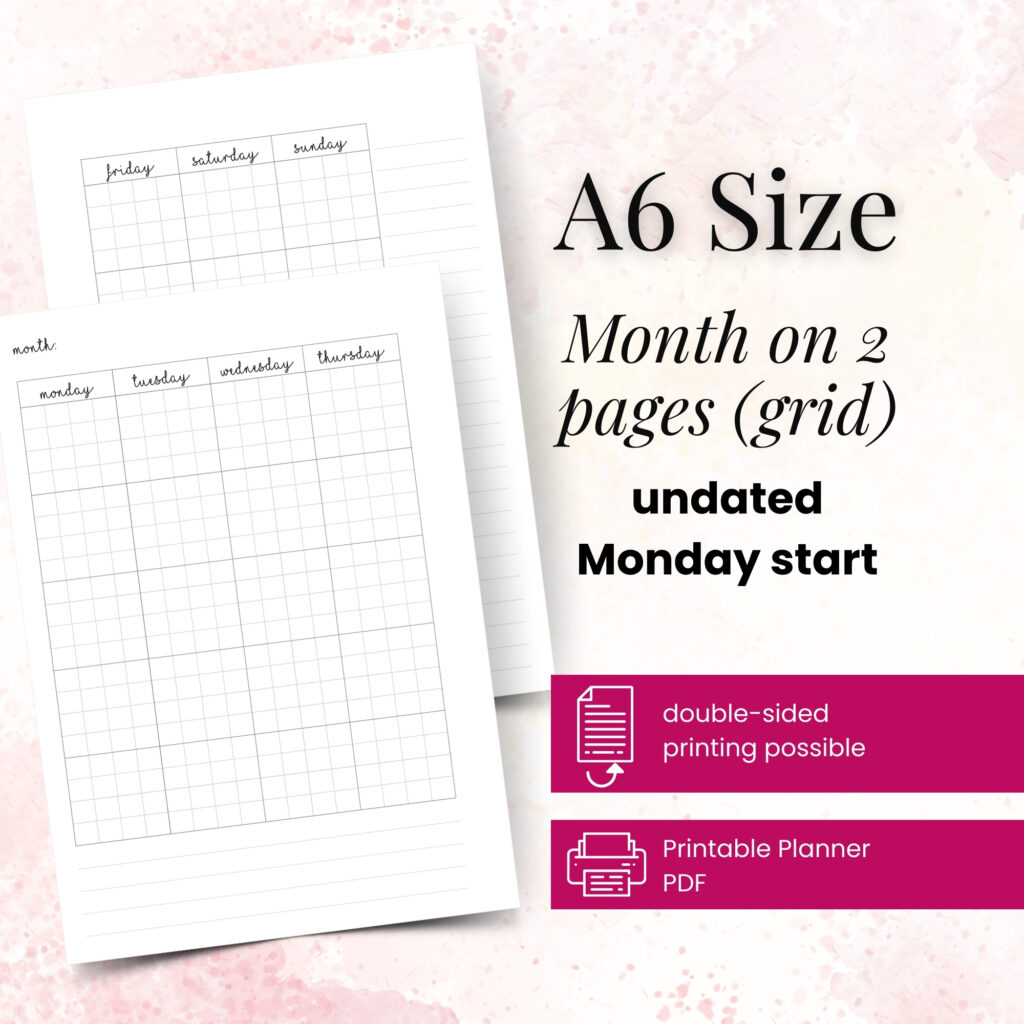
For some people, a full-page insert works best. Others prefer a foldout, a vellum-style overlay, or a compact dashboard paired with notes pages behind it. It depends on your planner size and how much visual detail you want. In an A6 or Personal setup, tighter focus usually works better. In A5 or Happy Planner Classic, you have more room for categories, mini timelines, or progress markers.
Turn your board into weekly action
This is the step many people skip. A vision board for goal execution only works when it feeds your weekly planning.
Each week, look at your board before you fill out your pages. Ask yourself what progress would look like in the next seven days. Then schedule that progress like it matters, because it does. If your board includes health, home, and money goals, your week might include a grocery planning block, one decluttering session, and a savings transfer.
The actions do not need to be dramatic. In fact, smaller steps usually win because they fit real life. One hour spent setting up a resume update, meal plan, or budget review often matters more than waiting for a perfect burst of motivation.
A good rhythm is to translate each goal into one weekly task and one habit tracker item. That gives you both project movement and repetition. For example, if your goal is to refresh your home, your weekly task might be organize one kitchen drawer. Your habit tracker item might be reset the counters each evening.
The best categories to include
Your categories should reflect your real life, not a perfect internet version of it. Most planner users do well with categories like health, home, finances, work, relationships, routines, and personal growth. You do not need all of them.
Choose the categories that actually need your attention this season. If work feels stable but your routines feel messy, give routines more space. If your finances need care, let that section be visible and specific. A vision board should help you focus, not pretend every area carries equal weight all the time.
There is also a trade-off between detail and simplicity. A highly detailed board can feel satisfying to build, but it may become harder to use quickly during weekly planning. A simpler board may look less impressive, but it often performs better because it keeps your next steps clear.
Common mistakes that weaken execution
The biggest mistake is making the board too broad. When every dream, habit, aesthetic preference, and long-term ambition lands on one page, your brain has to work harder to find what matters now.
Another common problem is creating a board once and never reviewing it. Goals change. Energy changes. Priorities shift with work seasons, family needs, or unexpected responsibilities. Your board should change too. That does not mean you failed. It means you are planning honestly.
Some people also confuse emotional appeal with usefulness. Of course you want your pages to feel beautiful. That is part of the joy of paper planning. But if your board looks lovely and gives you zero direction on Monday morning, it needs more function.
How to review and refresh your board
Check in monthly, or at least at the start of each new quarter. Look at what moved forward, what stalled, and what no longer fits. Then update your prompts, images, or focus sections.
You might remove a completed goal and replace it with a new one. You might shrink a section that feels settled and expand one that needs support. You might even discover that one goal belongs on a someday list rather than your active board.
This is where printable planner users have such a practical advantage. You can refresh a page, swap a dashboard, test a new layout, and refine your setup without getting stuck with a format that no longer serves you. Pretty Easy Planning is built around that kind of flexibility, which makes goal-focused planning feel much easier to sustain.
Make it personal enough to keep using
The most effective board is not the trendiest one. It is the one you will actually check, enjoy, and use. If you love a minimal layout with crisp boxes and short prompts, go with that. If you prefer softer visuals, layered textures, and color-coded categories, build your board that way.
Your successful planning story begins with a single print, but it keeps growing when that print supports your real routines. Let your board reflect your life, your planner size, your pace, and your goals as they exist right now.
A vision board should not pressure you to become someone else. It should make it easier to follow through as yourself, one planned step at a time.