A planner can look perfect on your desk and still frustrate you by Wednesday. Maybe the rings catch on your bag, your pages feel too bulky, or you want to move a weekly spread without opening hardware. The disc planner versus ring planner question is really about how you use your pages from day to day, not which system looks prettier in a photo.
Both formats can hold a beautiful mix of weekly layouts, lists, notes, dashboards, and goal pages. Both also work wonderfully with printable inserts because you choose exactly what belongs in your planner. The right choice comes down to your planning habits, your preferred size, and how much flexibility you want at your fingertips.
Key Takeaways
-
Choose a disc planner if you move pages often and want a book-like planner that folds flat.
-
Choose a ring planner if you want secure page storage, easier tabbed sections, and broad insert compatibility.
-
Discs feel lighter and sleeker, but pages can wear at the punched edge with heavy use.
-
Rings add bulk, yet they handle a full planner setup and thicker paper with confidence.
-
Your successful planning story begins with a single print, so start with the format that supports your real routine.
Disc Planner Versus Ring Planner: The Core Difference
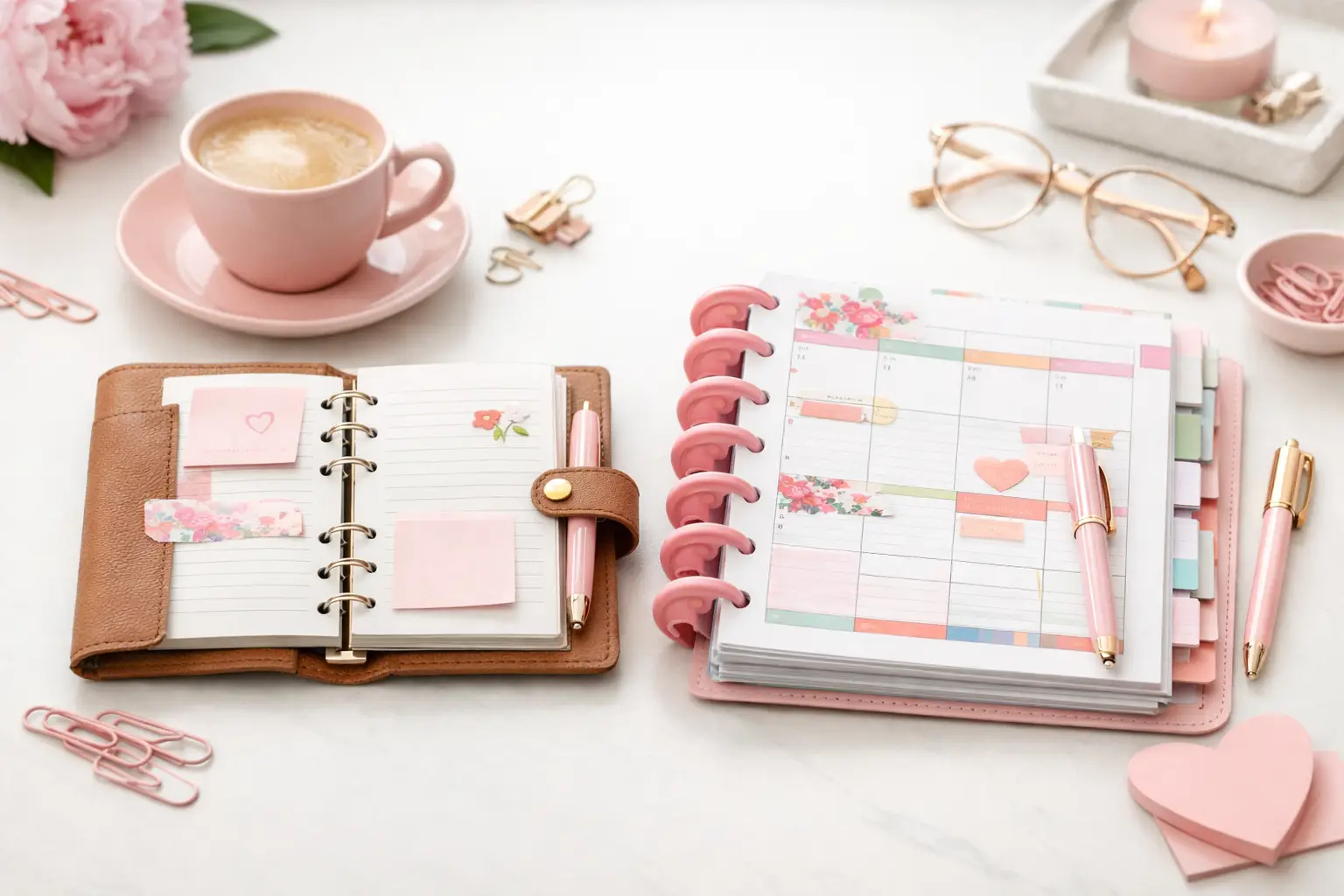
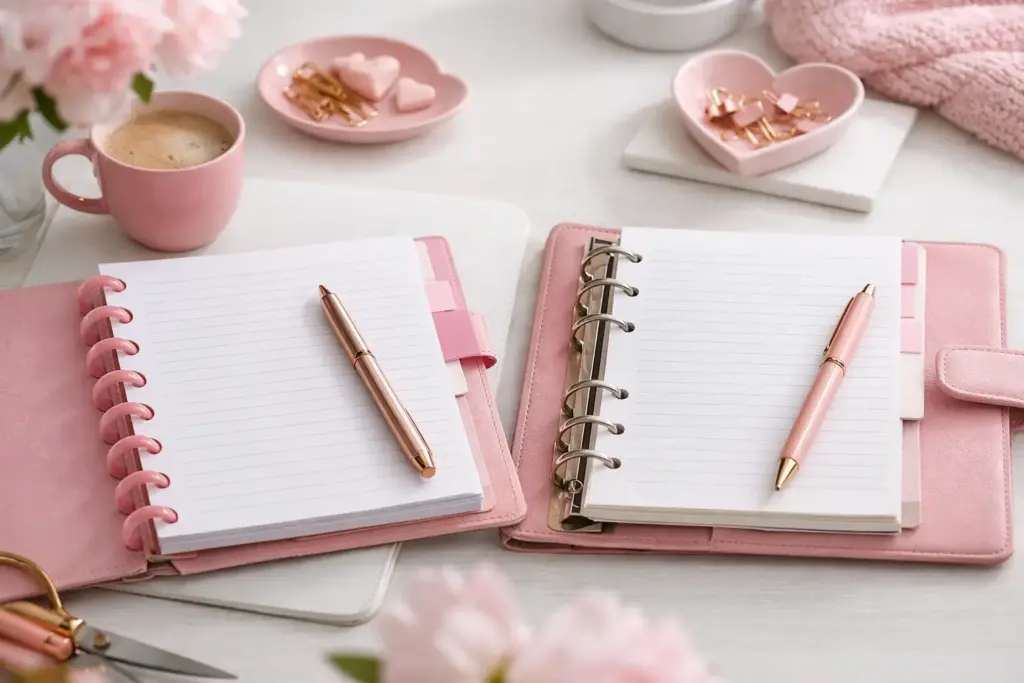
A disc planner uses small plastic or metal discs and mushroom-shaped punched pages. Each page wraps around the discs, so you can pull it out, move it, and press it back in without opening a mechanism. This setup gives the planner a smooth, notebook-like feel while keeping the pages removable.
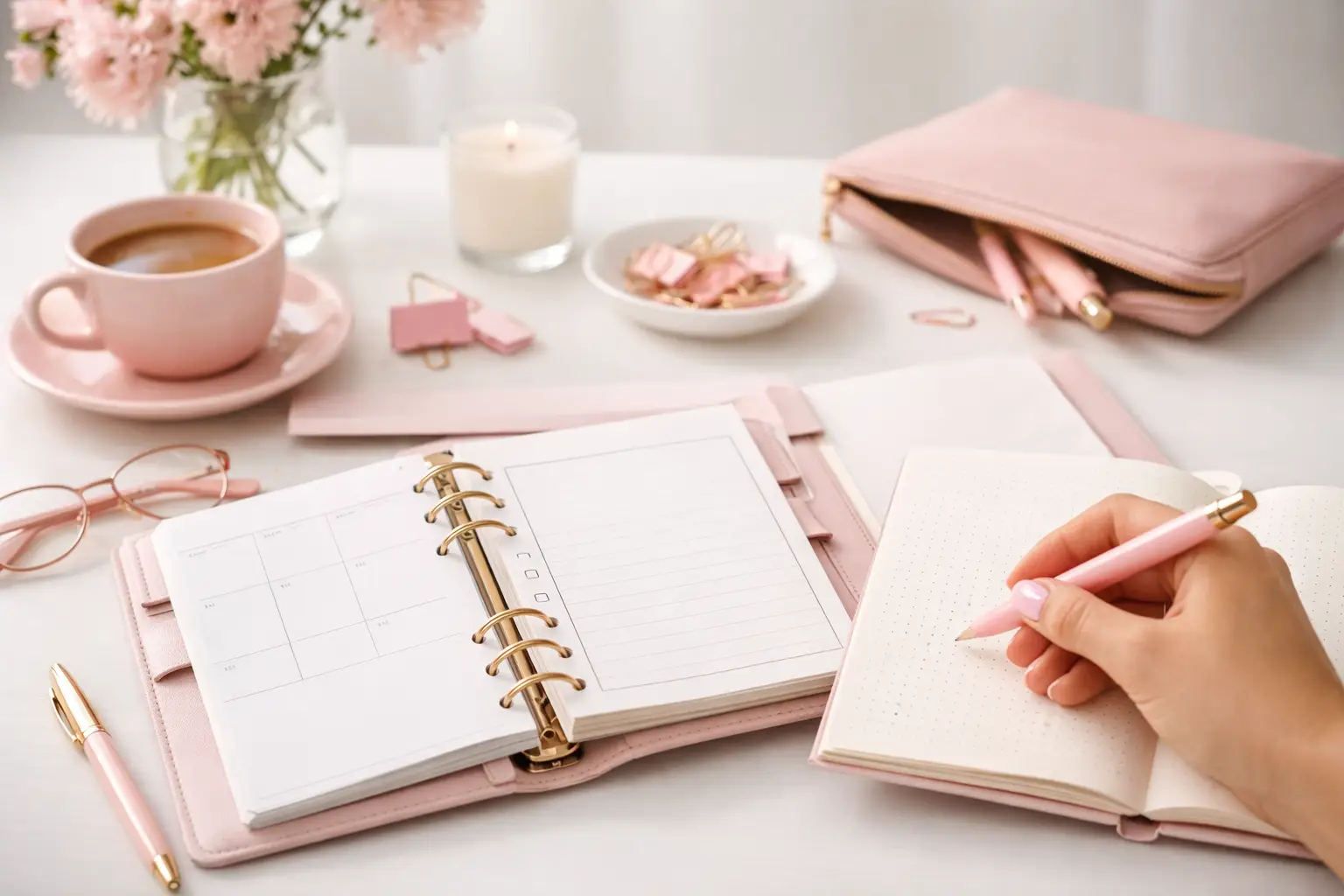
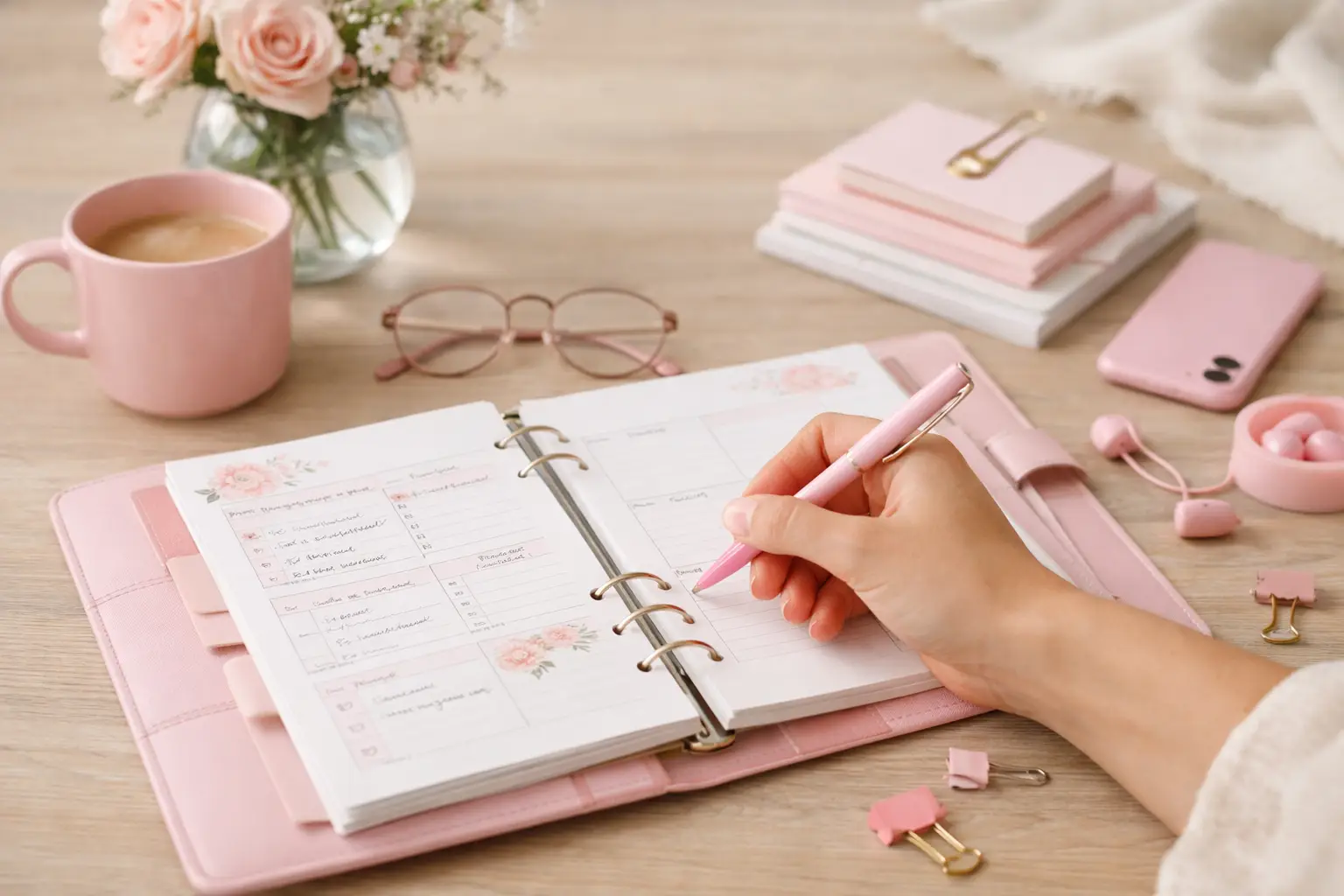
A ring planner uses metal rings that open and close around punched pages. Depending on the planner size, you may use six rings, as in A5, A6, Personal, and Personal Wide planners, or a different ring configuration. You open the rings to add, remove, or rearrange inserts.
That sounds like a small mechanical difference, but it changes the experience. A disc planner makes quick page moves feel effortless. A ring planner asks for one extra step, then gives you a very secure home for a larger collection of pages.
Choose a Disc Planner If You Rearrange Constantly
Disc-bound planning shines when your planner changes shape throughout the week. You can pull out a meal-planning page and place it beside your weekly spread while you make a grocery list. You can move a notes page from the back to the current week after a meeting. If a page no longer serves you, remove it in seconds.
This flexibility feels especially satisfying for planners who build their systems as they go. You might begin Monday with a weekly spread, add a project list on Tuesday, and place a fresh brain-dump sheet behind it on Friday. The planner stays current without requiring a full reset.
Disc planners also fold back on themselves like a notebook. That makes them comfortable for writing in small spaces, such as at the kitchen counter, in the car pickup line, or at a café table. If you often write with your planner held in one hand, this feature matters more than you might expect.
The Disc Planner Trade-Offs
The convenience of discs comes with a few realities. Mushroom-punched edges can wear down if you remove and reinsert the same page many times, especially with thin paper. A frequently used reference page, such as a yearly goals dashboard, may need heavier paper or a protective laminate.
Capacity also requires attention. Larger discs hold more pages, but they can make your planner feel wide and less tidy. Small discs create a sleek profile, yet they fill up fast when you add monthly pages, weekly inserts, notes, lists, and decorative dashboards. Many disc planner users keep current planning pages in the planner and store older pages elsewhere.
You will also need a mushroom-style punch or pre-punched inserts. If you print your own pages, test the punch alignment before printing a full batch. One sample page can save paper and prevent an annoying stack of mispunched inserts.
Choose a Ring Planner If You Like Clear Sections
A ring planner works beautifully when you prefer a more structured planner setup. Open the rings, place your monthly section behind a divider, follow it with weekly pages, then add notes, lists, and reference material in their own sections. Tabs stay easy to find because the pages sit securely inside the rings.
This format works particularly well for a planner that needs to do several jobs. You may use one section for work tasks, one for household planning, one for personal goals, and one for notes. Ring planners let you create a true paper command center without losing the boundaries between each area.
Rings also suit people who keep pages for a long time. If you enjoy looking back at past projects, tracking habits across several months, or storing important household information, rings can carry that archive with less concern about page-edge wear. You can use a larger ring size for more capacity or a slimmer size for a lighter everyday planner.
The Ring Planner Trade-Offs
Opening rings takes a little more time than pulling a disc-bound page out. If you regularly shift pages while planning, that pause can interrupt your flow. Always open rings using the tabs or mechanism rather than pulling the rings apart, since pulling can cause misalignment over time.
Ring planners also do not fold back as comfortably as disc planners. The hardware can sit under your hand while you write, and a full A5 planner can feel substantial in a handbag. Still, many planners love that solid, organized feeling. The rings make it obvious where every section begins and ends.
Paper placement needs care, too. Pages can snag on open rings during a quick rewrite or flip-through. Choose smooth, well-made hardware and avoid overfilling it. When the rings close cleanly, your pages turn more easily and your setup feels far more polished.
Think About Your Printable Insert Routine
Your insert routine should guide your decision as much as the binding itself. If you print a small set of current pages, use them intensely, and refresh them often, a disc planner may feel natural. You can keep a current weekly layout, a few focused lists, and only the notes you need right now.
If you print several categories at once and want them organized behind dividers, rings often make more sense. For example, an A5 ring planner can hold monthly calendars, weekly pages, finance trackers, family notes, cleaning lists, and project planning in separate sections. You can print only the pages you need while still maintaining a complete system.
Before committing, print one week of inserts in your preferred size. Add a monthly page, two note pages, and one list page. Then ask yourself whether you want to move those pages around freely or keep them in labeled sections. Your answer usually points to the right binding.
Size and Portability Can Change the Answer
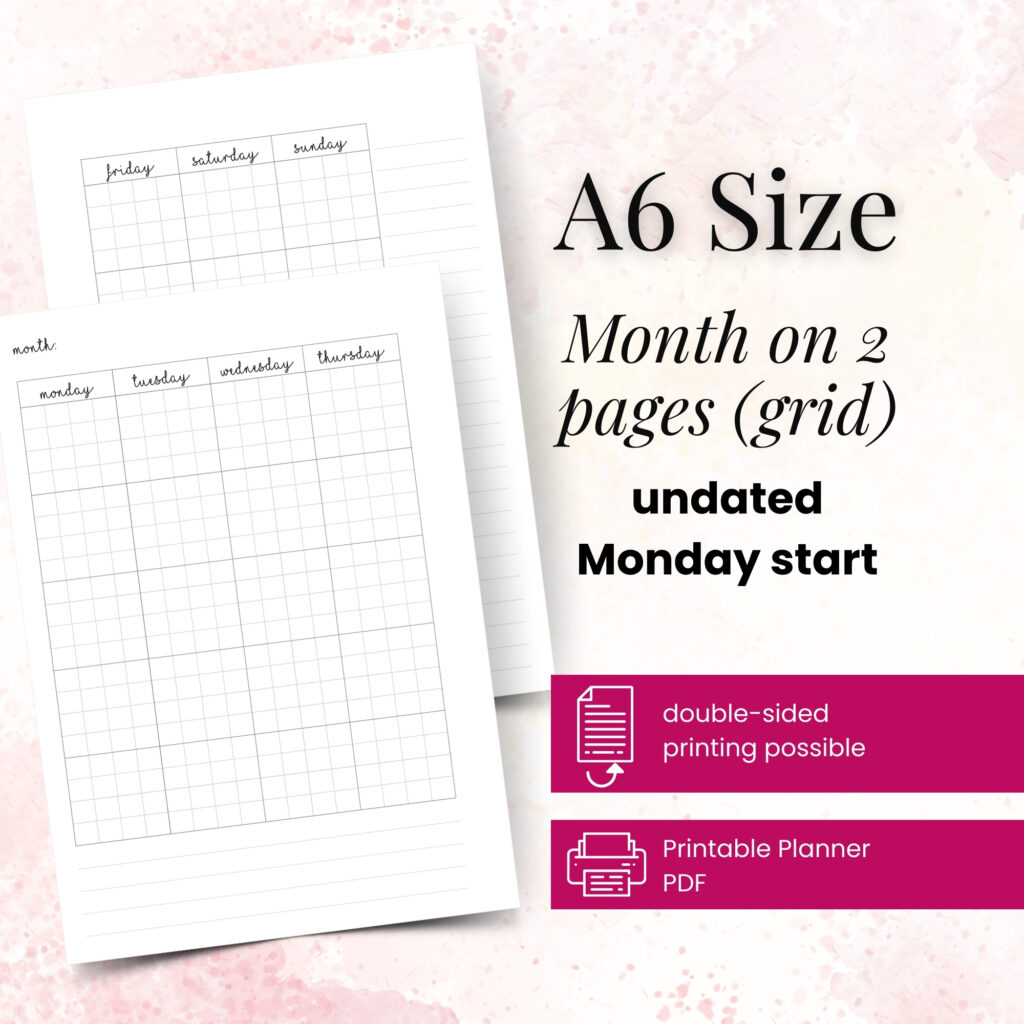
A Personal or A6 ring planner can travel easily, especially when you keep the ring capacity modest. It offers a compact, classic setup for appointments, daily tasks, and on-the-go notes. A5 rings provide more writing space but become noticeably heavier once you build out several sections.
Happy Planner Classic-size pages often pair naturally with discs because the format was designed around that style of binding. The wider page space gives you room for a detailed weekly layout, and the fold-back design stays convenient on a desk. If you carry it daily, consider whether a thinner set of current pages would better suit your bag.
Do not choose based on size alone, though. A slim ring planner can feel more portable than an overstuffed disc planner, while a carefully edited disc planner can feel lighter than a large ring binder. Page volume matters just as much as the cover dimensions.
A Simple Way to Decide
Picture a busy Sunday evening. You are setting up the week, checking appointments, writing meals, and adding tasks from a loose note page. If you want to lift that note page out and place it directly beside your week, choose discs. If you want to file it behind a labeled Notes tab after you process it, choose rings.
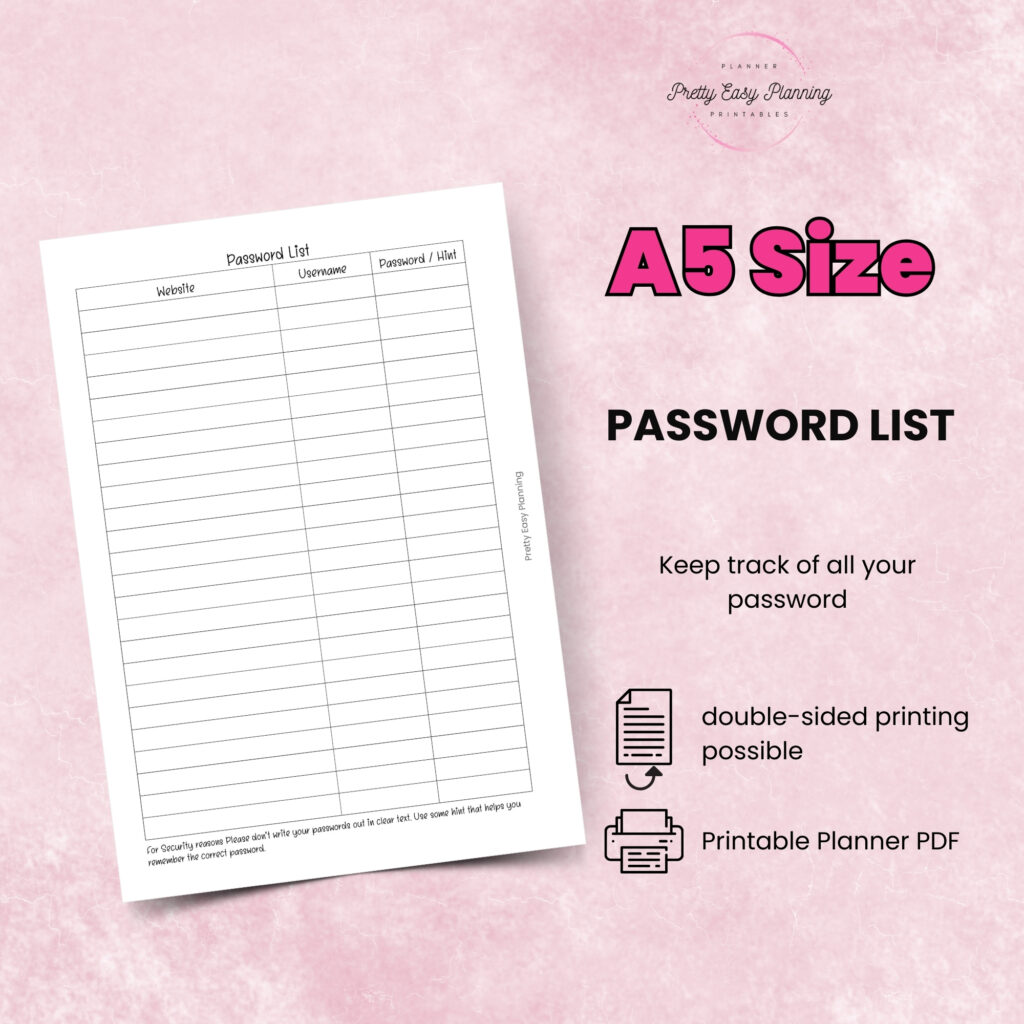
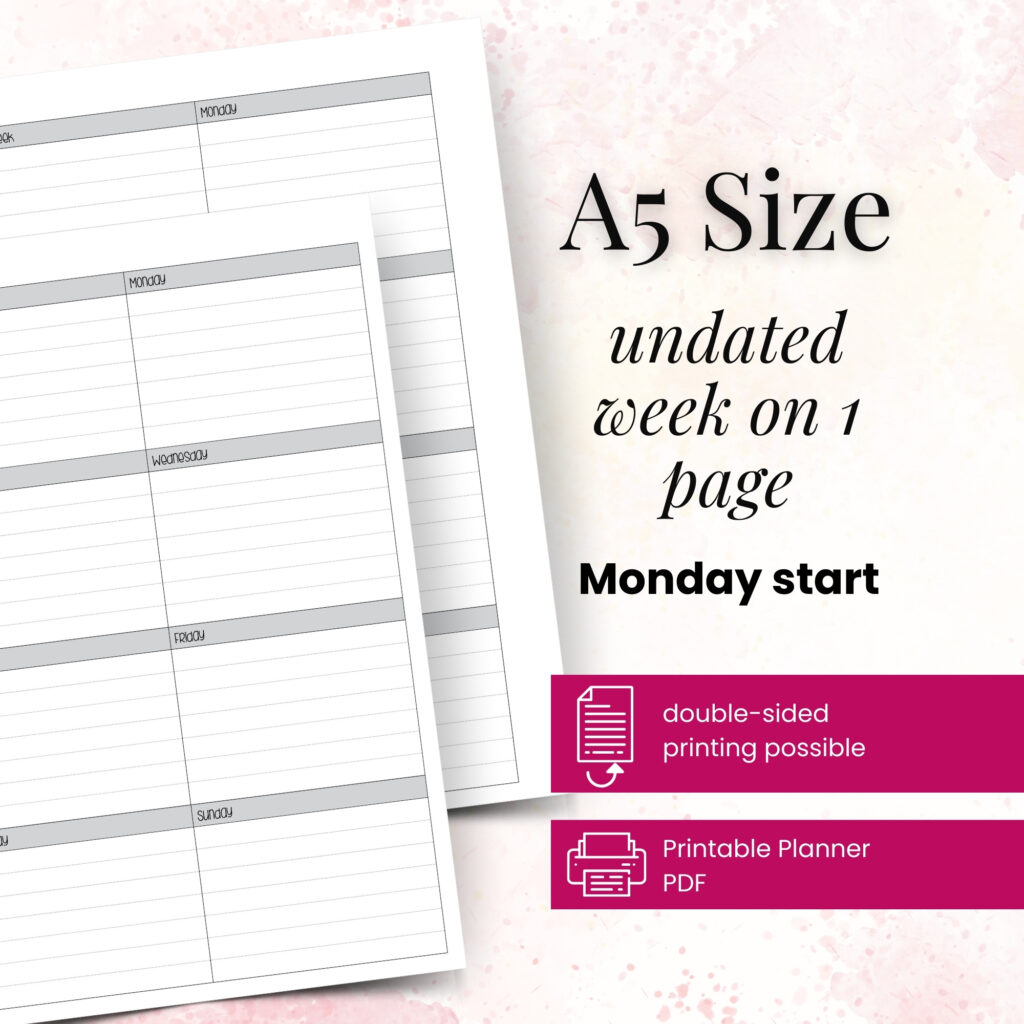
There is no wrong choice here. Some experienced paper planners even use both: a ring planner for long-term reference and a disc planner for the current season or active projects. Pretty Easy Planning inserts can support either approach when you print them in the size and punch style that fits your setup.
Give yourself permission to test, adjust, and rebuild. The planner that feels easy to open on an ordinary Tuesday is the one that will earn a place in your routine.