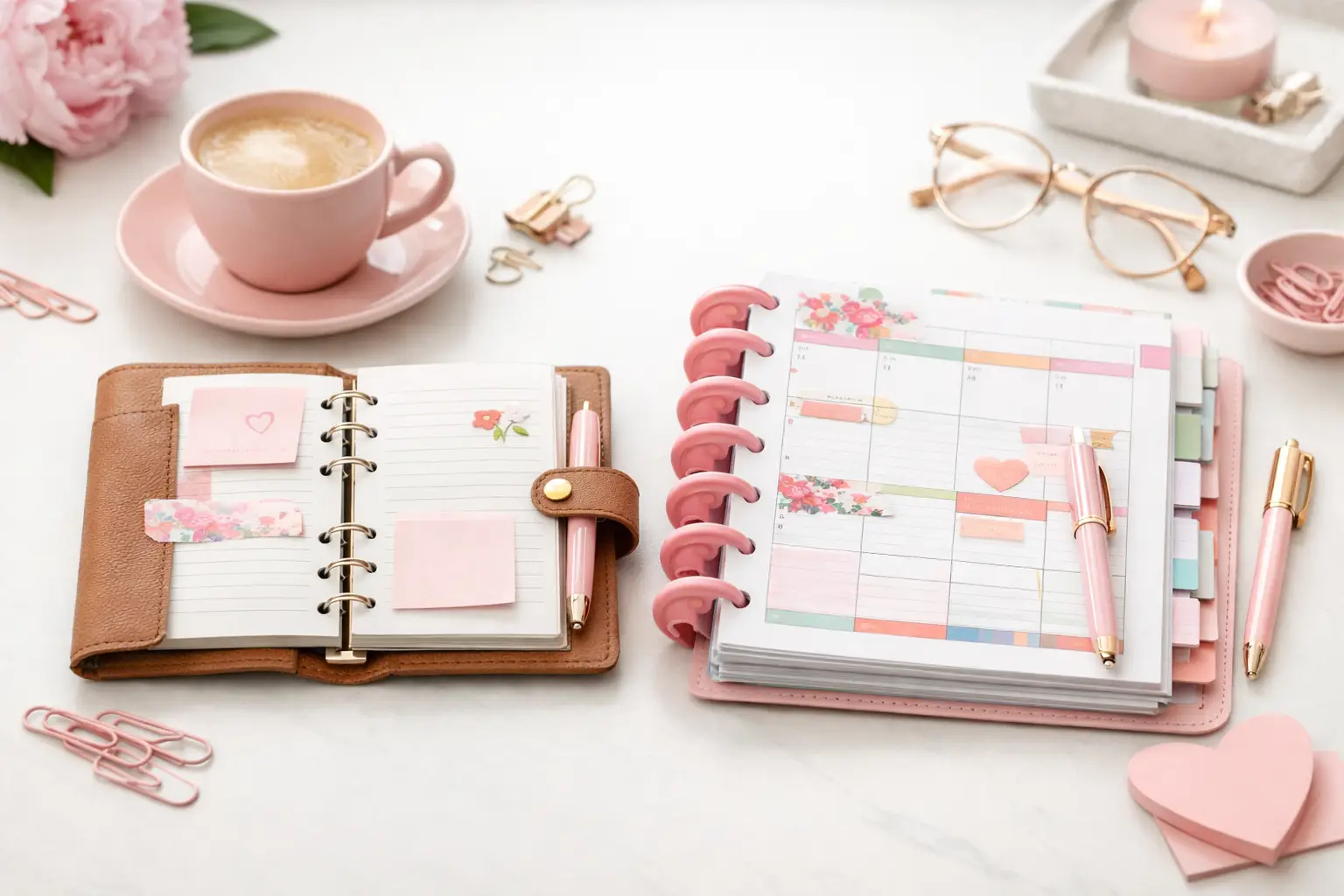
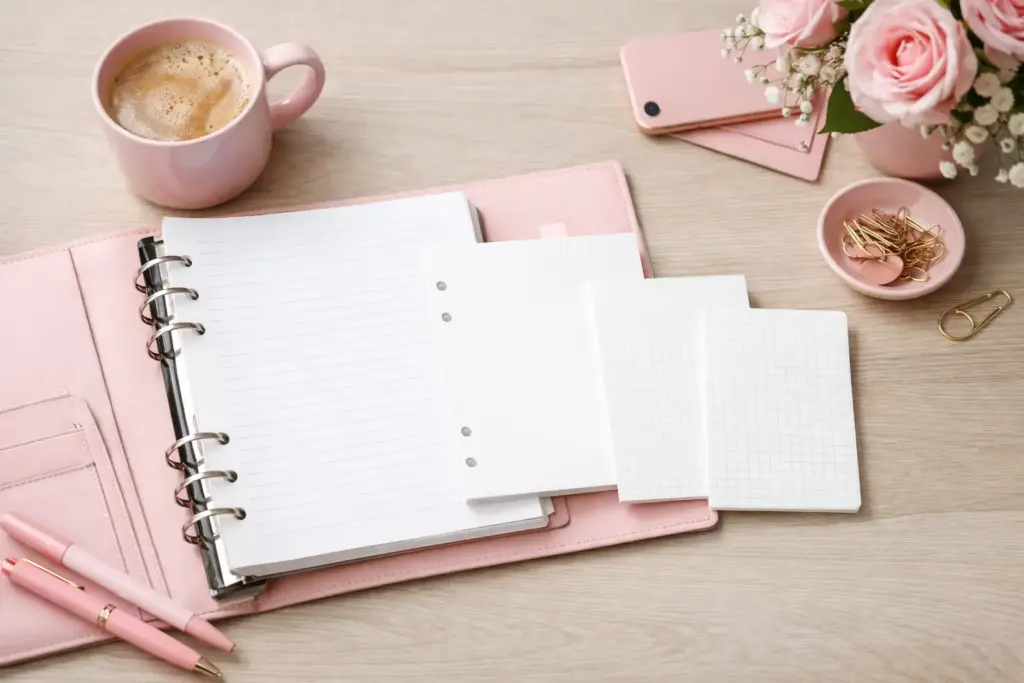
You can have the prettiest inserts in the world, but if the pages are too cramped, too bulky, or just wrong for your binder, planning gets annoying fast. Choosing the right personal planner insert size is one of those decisions that shapes how your whole system feels day to day.
Key Takeaways
- Personal size is a favorite because it balances portability and usable writing space.
- Standard Personal inserts measure 95 x 171 mm, while Personal Wide gives you extra width for roomier layouts.
- The best choice depends on how much you write, how often you carry your planner, your binder rings, and whether you print at home.
- If you want compact and classic, go Personal. If you want more space without jumping to A5, Personal Wide often feels like the sweet spot.
Why personal planner insert size matters more than people expect
Planner size sounds like a technical detail until you actually live with it. Then it becomes very personal, very quickly.
A page that is too small can make your weekly spread feel cramped before Monday even starts. A page that is too large might give you all the room you want, but turn your planner into something you stop carrying. That trade-off is exactly why so many planner users spend time fine-tuning size before they settle into a system.
For many paper planners, Personal sits in a very comfortable middle ground. It is compact enough to travel well and still large enough for real planning. That balance is the reason it has stayed so popular for years, especially for people who want a ring planner that fits real life instead of taking it over.
What is the standard personal planner insert size?
The standard Personal planner insert size is 95 x 171 mm. In inches, that is roughly 3.75 x 6.75.
This size is commonly used in six-ring planners labeled Personal or Personal Filofax-compatible. It gives you a narrow, vertical page that works especially well for lists, timed planning, appointments, routines, meal plans, and streamlined weekly layouts.
The key word here is streamlined. Personal pages do not waste space, which many planner lovers appreciate. But they also do not forgive oversized handwriting, heavy sticker layering, or layouts packed with too many sections. If you like a clean setup with focused priorities, Personal can feel wonderfully efficient. If you tend to write a lot in every box, it may start to feel tight.
Personal vs Personal Wide insert size
This is where many planner users pause and rethink everything.
Personal Wide keeps the same general planner feel but adds more horizontal room. Dimensions can vary a bit by shop or system, which is why checking each product’s listed measurements matters. In practical terms, Personal Wide is designed for people who love the portability of Personal but want layouts that breathe a little more.
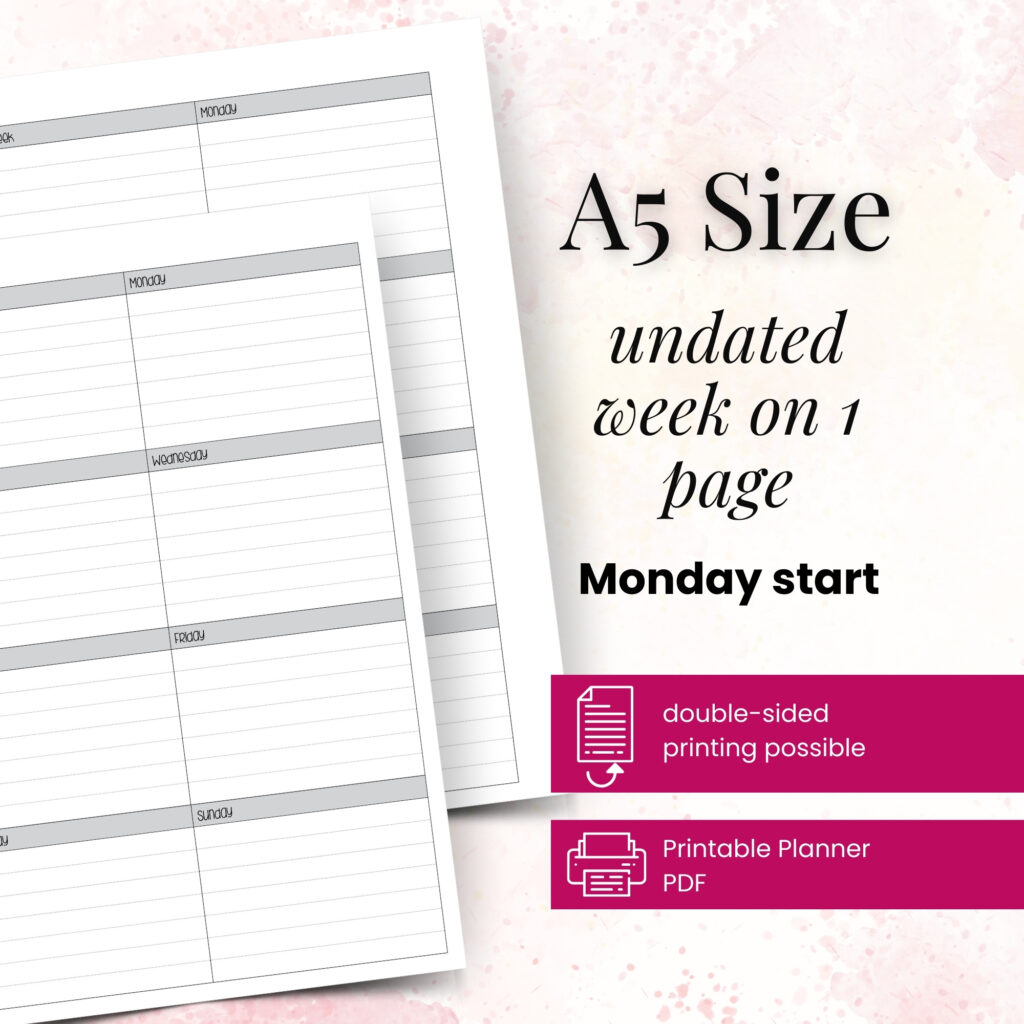
That extra width changes the experience more than you might expect. Weekly inserts become easier to write in. Daily pages feel less squeezed. Functional sections like habits, to-dos, meals, and notes can sit together without looking crowded.
The trade-off is that Personal Wide is less universally standardized than classic Personal. You need to make sure your binder is made for it, and not every printable or accessory designed for Personal will translate perfectly. If you love broad compatibility and easy shopping, standard Personal is simpler. If writing comfort matters more, Personal Wide can be worth the extra attention.
How personal compares to A6 and A5
If you are choosing between formats rather than just learning one size, it helps to place Personal in context.
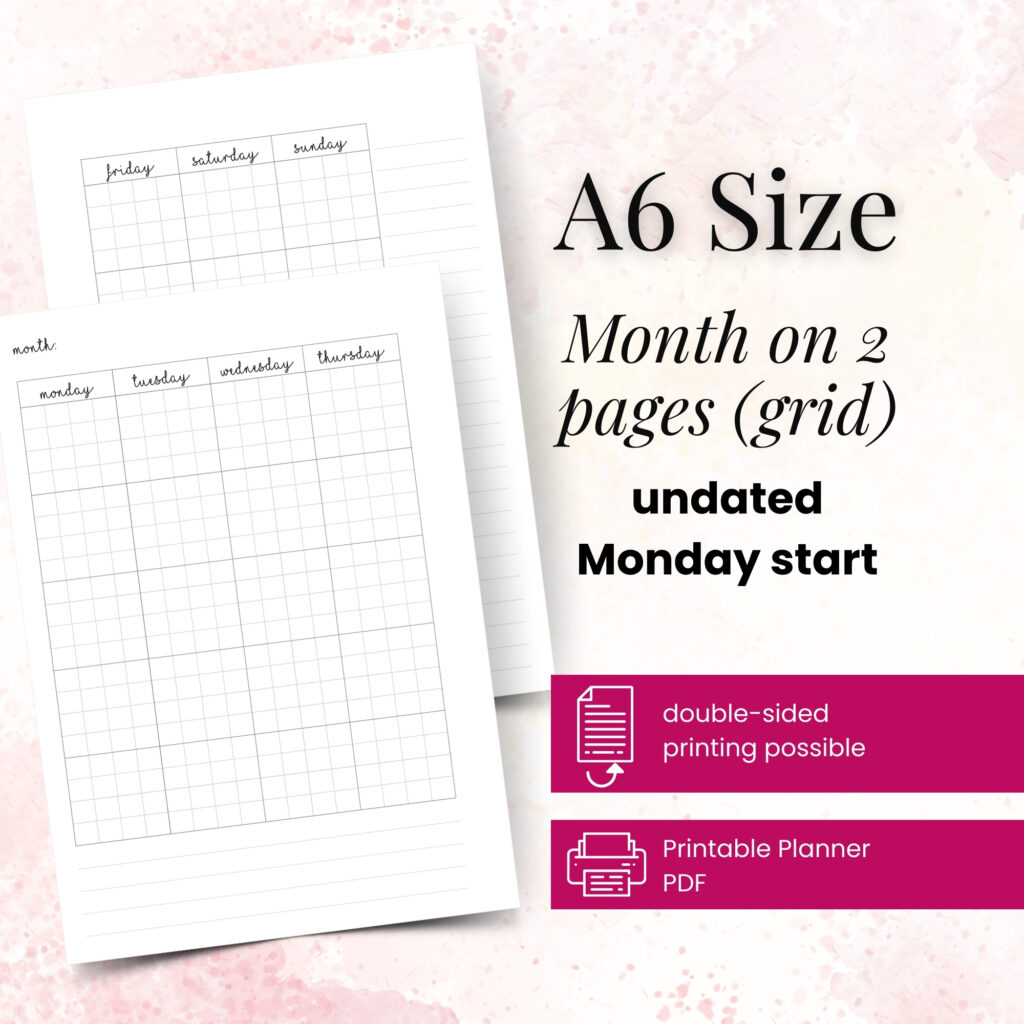
A6 is smaller and often feels more compact and casual. It is great for simple planning, short lists, and on-the-go use, but it can feel limited for detailed weekly planning. A5 sits on the other end, with far more writing room and more flexibility for layered layouts, though it is noticeably less portable.
Personal lands between those worlds in spirit, even if the proportions are unique. It gives you more structure than A6 and more portability than A5. That is why it appeals to planner users who want a serious planning tool without carrying something that feels like a small notebook everywhere.
If you mainly plan at a desk, A5 may still be the better fit. If your planner needs to live in your bag and come with you daily, Personal often makes more sense.
Who should choose a Personal planner insert size?
Personal works especially well for the planner user who wants focused planning without excess bulk. If you rely on weekly planning, task lists, appointments, and routine tracking, this size can be incredibly satisfying.
It is also a strong choice if you use multiple inserts and like to build a custom setup. Monthly calendars, weekly pages, notes, lists, finance sheets, and dashboards can all live together without the binder becoming as heavy as a larger format. That flexibility is part of the charm.
Where Personal can be less ideal is for journaling-heavy planning or highly decorative spreads. You can absolutely decorate Personal pages, of course, but the margin for error is smaller. Every sticker, box, and handwritten note takes up meaningful space. If your planning style is expressive and full-page, you may prefer more room.
Printing tips for personal planner insert size
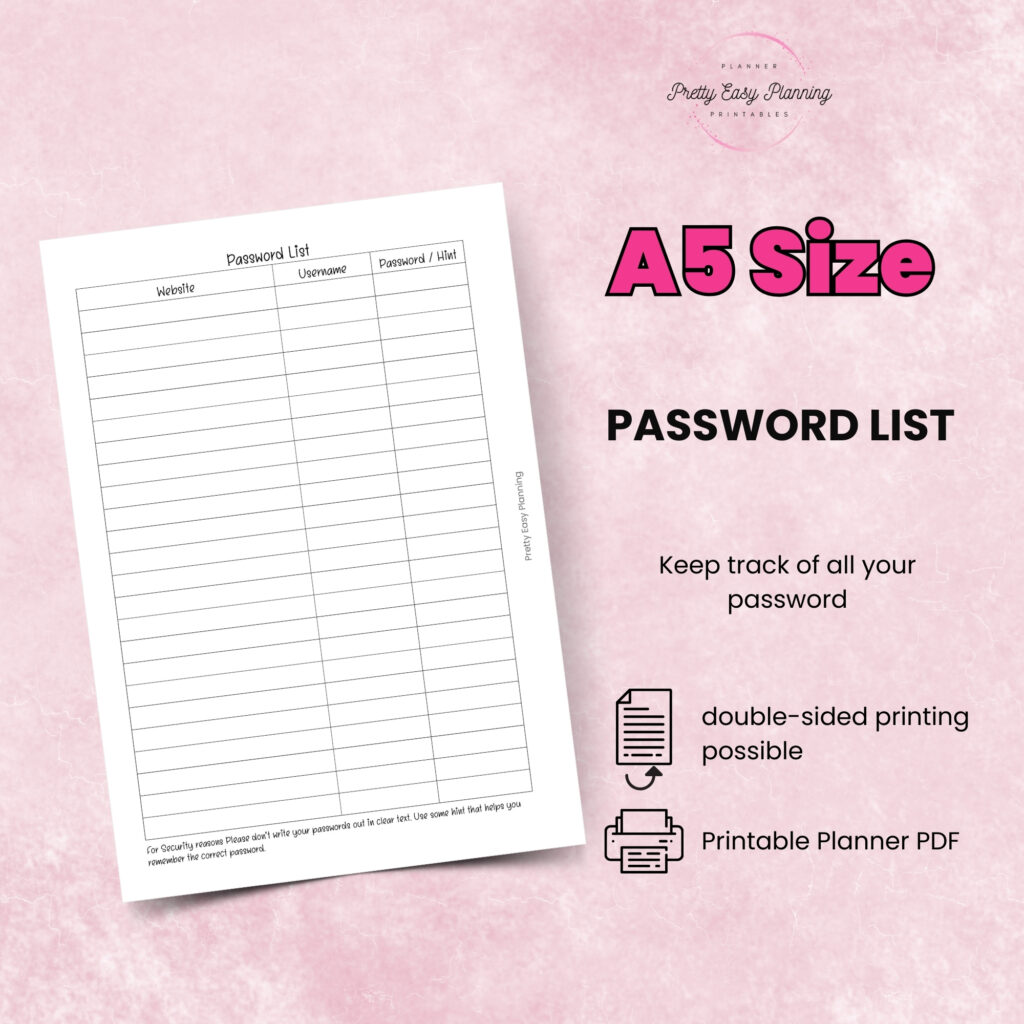
Printable planning is the creative corner of planning possibilities, but only if the final pages actually fit your planner the way you expect.
First, always check the listed page size before printing. “Personal” is not the same as “print at 100% and hope for the best.” If your printer settings auto-scale to fit paper, your inserts can come out slightly off, which becomes very obvious once you punch and stack them.
Printing at actual size is usually the safest route. If the file includes crop marks or trim guides, use them. Good inserts are designed with real printing habits in mind, but home printers still have their own opinions. Testing one page before printing a full set saves paper, ink, and frustration.
Paper choice matters too. Personal inserts are smaller, so thicker paper can make a ring planner fill up faster than expected. If you like fountain pens or heavier inks, you may want thicker stock. If you like carrying a full quarter of inserts at once, lighter paper may keep your planner more comfortable.
Binder capacity changes the answer
This part gets overlooked all the time.
The right personal planner insert size is not only about the page. It is also about the rings. Small rings can make even a beautifully sized insert feel irritating if you overstuff the planner. Pages stop turning smoothly, tab sections become crowded, and writing near the rings gets awkward.
If you use compact rings, Personal is often a smart choice because it keeps the overall setup manageable. If your rings are generous and you still feel constrained, that may be a sign to look at Personal Wide or even A5 instead of trying to force more content into smaller pages.
A planner should support your routine, not create tiny daily annoyances. Sometimes the issue is not the layout at all. It is capacity.
How to tell if your current size is too small
Usually, your planner tells on itself.
If you constantly write in the margins, skip sections because there is no room, fold in extra notes, or avoid using inserts you actually like because they feel cramped, your current size may be working against you. The same goes if your handwriting changes dramatically just to fit the page.
On the other hand, if your pages feel half empty week after week, a smaller size might suit you better. A well-matched planner size feels easy. You use the space naturally, your layouts make sense, and you are not fighting the page.
That is one reason printable inserts are so useful. You can test what really works before committing long term. Print a week, live with it, and adjust. At Pretty Easy Planning, that flexibility is part of what makes building a custom system feel so much easier.
The best personal planner insert size is the one you will keep using
There is no universally perfect answer, only a better fit for the way you plan.
If you want a compact planner that still handles serious daily organization, standard Personal is a strong choice. If you love that format but want more breathing room, Personal Wide may be your better match. If you need pages for long-form notes, memory keeping, or layered planning, moving up to A5 can save you a lot of frustration.
The good news is that you do not need to guess forever. Print a few layouts, try them in your binder, and pay attention to what feels easy. Your successful planning story begins with a single print, and often, with the right size page.
The best planner setup is the one that makes you want to open it tomorrow.