That gorgeous weekly layout can feel completely wrong if it sticks out past your cover, lands on the rings, or shrinks into tiny unreadable boxes. If you are wondering what size planner inserts fit your planner, start with the planner itself – not the page design. A few simple measurements will help you print pages that turn smoothly, look intentional, and support the way you actually plan.
Your planner does not need to follow anyone else’s setup. The right size depends on your cover, binding style, writing habits, and how much space you want to carry. Once you know your format, printable inserts make it easy to create a planning routine that feels like yours.
Key Takeaways
-
Match the finished paper size to your planner’s page size, not the outside cover measurement.
-
Check both dimensions and binding style before printing or punching anything.
-
A5, A6, Personal, Personal Wide, and Happy Planner Classic use different page measurements.
-
Print at 100% or "Actual Size" unless the insert instructions tell you otherwise.
-
Test one page first. It saves paper, ink, and the frustration of punching a full batch incorrectly.
What Size Planner Inserts Fit? Start With the Page
The simplest answer is this: planner inserts fit when their trimmed page dimensions match the pages your planner was made to hold. Measure an existing insert if you have one. Place it flat on a ruler and measure the width first, then the height. Do not measure the cover, since many covers extend beyond the paper to protect the pages.
If you do not have an old page to measure, look for the size name on the planner packaging or product description. Be careful with general labels such as “medium” or “large.” Those labels vary by brand, while dimensions tell the real story.
A planner can also look similar to another format without using the same paper size. For example, an A6 ring planner and a Personal planner are both compact, but their pages differ enough that inserts will not line up correctly. A page that is only slightly too wide can catch on the cover or tabs every time you close the planner.
Common Planner Insert Sizes
These measurements describe the finished page, before considering the holes or discs that hold it in place.
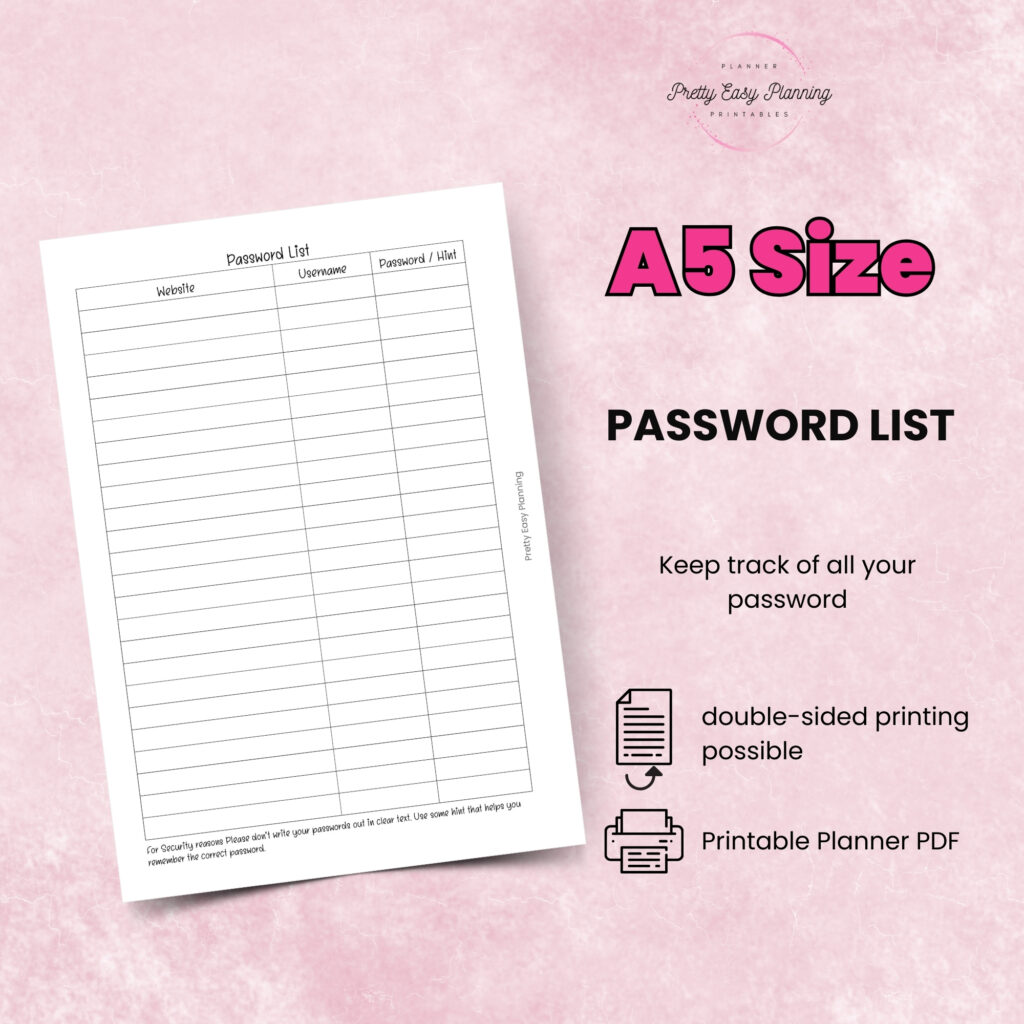
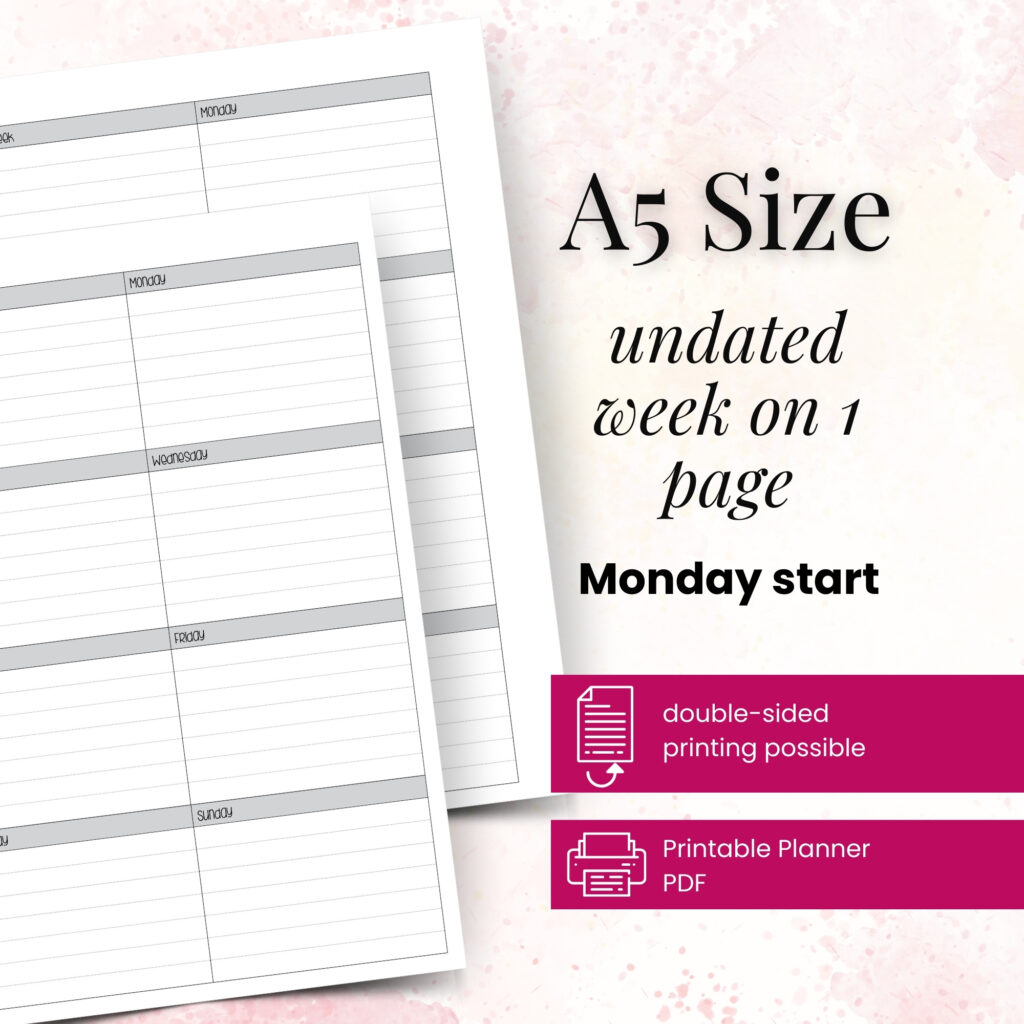
A5 inserts
A5 pages measure 5.83 by 8.27 inches or 148 by 210 mm. This roomy format works beautifully for detailed weekly spreads, project planning, meal plans, and daily pages with generous writing space. Many six-ring planners use A5 paper, but always check the hole pattern because ring placement can differ between systems.
A5 is a favorite for planners who want one place for work, home, appointments, and personal goals. It is larger than Personal size but still easy to carry in a tote or work bag.
A6 inserts
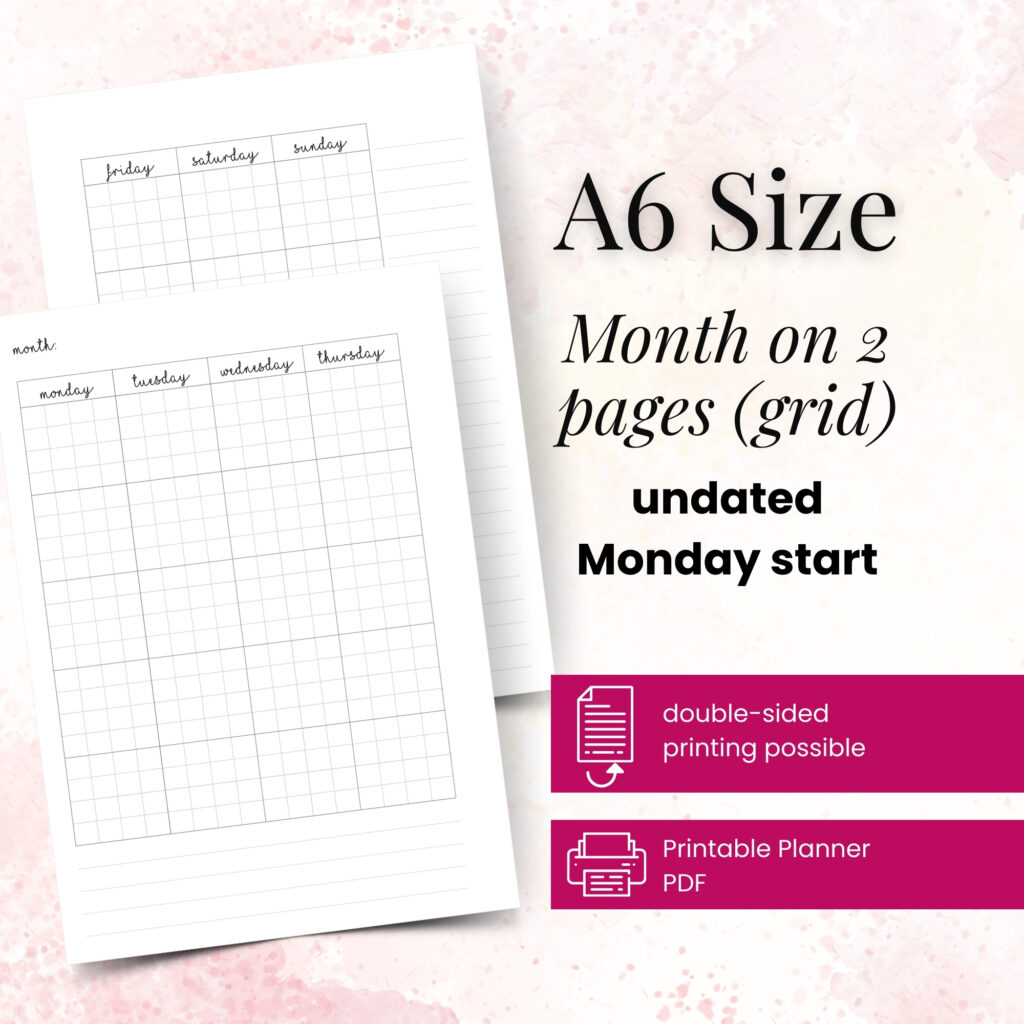
A6 pages measure 4.13 by 5.83 inches or 105 by 148 mm. They fit small ring planners that you can easily take everywhere. The space feels more limited, so choose layouts with a clear focus: appointments, top priorities, simple daily notes, or a compact weekly overview.
A6 is not half of A5 in the way many people expect when printing. It has its own dimensions and should use files designed specifically for A6. Scaling an A5 page down may make text and writing sections too small to enjoy.
Personal inserts
Personal pages measure 3.74 by 6.73 inches or 95 by 171 mm. This tall, narrow format fits many classic six-ring planners. It offers more vertical writing room than A6 while staying slim enough for an on-the-go planner.
Personal inserts suit time-blocking, lists, habit tracking, and week-on-two-page layouts. Because the page is narrow, wide horizontal designs usually feel crowded. Look for layouts built for the format instead of trying to force a wider page into it.
Personal Wide inserts
Personal Wide pages measure 4.75 by 6.73 inches or 120 by 171 mm. They keep the familiar Personal height but add useful width for writing, stickers, and functional boxes. If you love the portability of a Personal planner but wish you had more elbow room, Personal Wide can be the sweet spot.
Do not assume a Personal Wide insert fits a standard Personal cover. The extra width matters. It may extend beyond the cover or interfere with the closure if you use it in the wrong planner.
Happy Planner Classic inserts
Happy Planner Classic pages measure 7 by 9.25 inches. This format uses discs rather than rings, so the page size and the disc punch shape both matter. Classic inserts give you plenty of room for colorful weekly planning, lists, notes, and creative memory keeping.
A standard A5 page will not fit a Happy Planner Classic correctly, even though both feel like mid-sized formats. The Happy Planner Classic is wider and taller, and its mushroom-shaped disc slots require the correct punch. A correctly sized page with round ring holes still will not work in a discbound planner.
Size Is Only Half the Fit
Once the paper dimensions match, check how your planner holds its pages. Ring-bound planners need holes that match the number of rings and their spacing. A six-ring A5 planner, for instance, needs a six-hole punch pattern made for A5. A Personal six-hole punch may look close, but the holes sit in different places.
Disc planners need mushroom-shaped slots. Wire-bound and spiral planners generally do not accept removable inserts unless you use a special workaround, such as adding pages with a compatible binding method. For a simple, reusable setup, choose inserts that match a removable ring or disc system.
Also consider the planner’s capacity. Thick paper, dashboards, dividers, and decorative vellum-style pages can make a planner feel full quickly. A page may technically fit, yet become hard to turn if the rings are too small or the discs are overloaded. If your planner feels crowded, reduce the number of months you carry or use lighter paper for everyday pages.
How to Check Your Fit Before You Print a Full Set
A one-page test is the easiest way to avoid a frustrating batch of mismatched inserts. First, confirm that you selected the correct file size. Many printable collections include several formats, so choose A5, A6, Personal, Personal Wide, or Happy Planner Classic based on your actual planner.
Next, open the print dialog and select Actual Size or 100%. Avoid settings such as “Fit to Page,” “Scale to Fit,” or “Shrink Oversized Pages” unless the product instructions specifically recommend them. Those settings can quietly change the dimensions, especially when your printer uses Letter paper and the insert uses a smaller finished size.
Print one page on regular paper. Trim it along the cut marks if the page includes them, then place it inside your planner without punching. Check the top, bottom, and outer edge. The page should sit neatly within the cover, with enough room for tabs and closures.
When the trim looks right, punch the test page and turn it through the planner. Watch for three things: the holes should sit cleanly on the rings or discs, the page should not rub against the cover, and the layout should remain comfortable to write on. Only then should you print the rest of your set on your preferred paper.
Choose the Right Layout for the Space You Have
The best planner insert size is not always the biggest one. A5 offers room for detailed plans, but it can feel bulky if you only need a quick weekly view. A6 and Personal formats travel easily, though they ask you to prioritize what belongs on each page. Personal Wide gives you a little more creative breathing room without moving to a larger planner.
Think about where you plan most often. If your planner stays on a desk and holds family schedules, work tasks, and long notes, A5 or Happy Planner Classic may feel more comfortable. If it goes to appointments, errands, and coffee shops, A6, Personal, or Personal Wide may make more sense.
You can also build a better system by mixing insert types within the same size. Keep a weekly spread for appointments, add a notes page after each week, and use dashboards to separate home, work, and personal goals. Pretty Easy Planning creates format-specific PDF inserts so you can choose pages for your routine rather than settling for a pre-printed planner that does not quite fit.
A well-fitting insert does more than look polished. It makes your planner easier to open, write in, carry, and return to each day. Measure carefully, test a single page, and give yourself permission to adjust as your planning needs change. Your successful planning story really can begin with a single print.