Some planner pages look beautiful until real life hits them. Then the weekly spread gets crowded, the monthly view feels too vague, and the daily pages turn into a catch-all for everything. If that sounds familiar, daily weekly and monthly routines probably do not need more decoration – they need a better rhythm.
When your routines match the way life actually moves, planning feels lighter. You stop rewriting the same tasks in three places, and you start giving each page a clear job. That is where a layered planner system really shines.
Key Takeaways
-
Daily, weekly and monthly routines work best when each one has a different purpose.
-
Monthly pages help you see timing, weekly pages help you shape your workload, and daily pages help you focus.
-
The goal is not to track everything everywhere. It is to place the right information on the right page.
-
Printable planner inserts make it easier to adjust your system when your schedule, goals, or season of life changes.
-
A routine should support your real life, not create extra planner work.
Why daily, weekly and monthly routines matter
A lot of planning frustration comes from using every page the same way. If your monthly, weekly, and daily layouts all hold appointments, tasks, notes, and goals in full detail, your planner starts repeating itself. That creates clutter fast.
A better approach is to let each layer do one main job. Your monthly spread gives you a bird’s-eye view. Your weekly pages help you organize time, tasks, and priorities. Your daily pages support execution.
This sounds simple, but it changes everything. Instead of asking one layout to do all the heavy lifting, you build a flow. That flow helps you plan ahead without losing sight of what matters today.
For many paper planner users, this is also where customization becomes so valuable. A fixed planner often forces you into one style of planning whether it fits or not. A printable system lets you choose layouts that support your routine instead of fighting it.
What your monthly routine should do
Your monthly routine should answer one big question: what is coming up, and when?
This is the place for appointments, events, deadlines, bill dates, school dates, travel, and anything tied to a specific point in the month. If you track goals, your monthly pages can also hold a few larger focus areas, but keep them broad. Think finish taxes, plan birthday party, or prepare for a work launch – not every tiny task required to get there.
A monthly planning session works best when it stays calm and high level. Look at the full month, mark fixed commitments, notice busy weeks, and identify anything that needs early preparation. If your second week is packed with meetings and family events, you can spot that before it becomes stressful.
This is also a great place to note seasonal tasks. Maybe the first week of the month is when you review your budget, rotate household supplies, or prep recurring paperwork. Those recurring anchors help your month feel steady.
A simple monthly planning example
At the start of September, you mark dentist appointments, a project deadline, two birthdays, and a long weekend away. Then you add three monthly focus points: refresh morning routine, finish school paperwork, and sort fall wardrobe. You are not planning every action yet. You are setting the stage.
How weekly routines connect the dots
If the month gives you the map, the week gives you the route.
Your weekly routine should translate bigger plans into realistic action. This is where you decide what can actually happen over the next seven days. Weekly planning is less about dreaming and more about editing.
Start with your appointments and fixed events. Then pull in tasks that support your monthly priorities. If one of your monthly goals is school paperwork, your weekly page might include gather forms, sign documents, and mail packet. Now the big goal feels manageable.
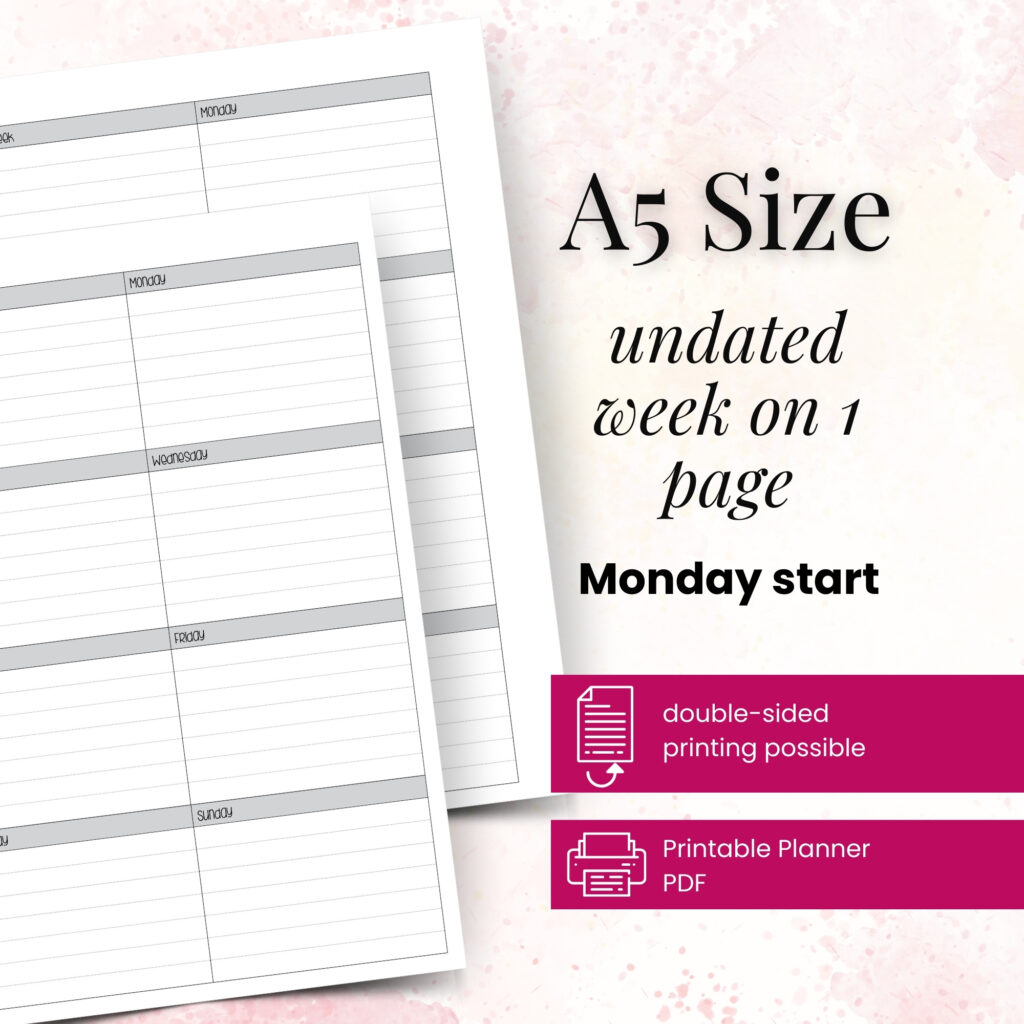
Weekly pages also help balance your time. You can see whether one day is overloaded, whether errands make sense in one block, or whether a task belongs next week instead. That is one of the biggest benefits of weekly planning in a paper system – you can spread things out visually.
Daily weekly monthly routines without repetition
The trickiest part of daily, weekly and monthly routines is avoiding too much overlap. Yes, your pages should connect. No, they should not all say the same thing.
A simple rule helps here. Put fixed dates on the monthly layout. Put task planning and workload decisions on the weekly layout. Put today-focused actions on the daily page.
So if you have a doctor’s appointment on the 18th, that belongs on the month and the week. On the daily page for the 18th, you might write leave by 1:15, bring insurance card, and stop at pharmacy after. That is not repetition. That is useful detail at the right level.
When people say their planner feels messy, this is often the problem. Too much copying creates friction. A cleaner system keeps each layer useful.
What your daily routine should do
Daily planning should help you start and finish the day with clarity.
This page is where you narrow your focus. Choose your top priorities, list time-sensitive tasks, and capture any details you need today. Some people like a timed schedule. Others prefer a flexible task list with space for notes, meals, habits, or gratitude. It depends on your life and the amount of structure that helps you most.
If you work from home, your daily page might separate personal and work tasks. If you run a busy household, you might want room for errands, dinner planning, and reminders. If you love a decorative setup, you can still keep things functional by protecting the core planning space first.
A useful daily routine usually includes a quick morning check-in and a short evening reset. In the morning, review appointments and choose your top three priorities. In the evening, check off what is done, migrate what still matters, and note anything you need tomorrow. That takes only a few minutes, but it keeps your planner current.
When daily pages are not necessary
Not everyone needs a daily page every day. If your weeks are steady and not overly detailed, a weekly insert may be enough for weekdays, with daily pages used only for busy days. That flexibility is one reason experienced planner users often prefer printable inserts. You can print more daily pages during a demanding season and fewer when life is simpler.
Building your routine in a way you will actually keep up with
The most beautiful planner setup still fails if it asks too much from you.
Start small. Use one monthly check-in, one weekly planning session, and one short daily review. That is enough to create structure without turning planning into another job. Once that rhythm feels easy, you can add extras like habit tracking, meal planning, project notes, or dashboards.
It also helps to match your inserts to your habits. If you always write long task lists, choose layouts with generous writing space. If you plan best visually, pick designs that separate categories clearly. If you like changing things as your needs shift, that is not a flaw. That is smart planning.
At Pretty Easy Planning, that flexible approach is part of the appeal. You can print the pages you need, in the size you use, and build a system that works for your actual routine instead of settling for a planner that almost fits.
Common mistakes with daily, weekly and monthly routines
One common mistake is making every page too detailed. Another is skipping the weekly review and expecting the daily page to fix everything. Daily planning works better when the week already has structure.
A third mistake is choosing layouts based only on looks. A pretty page matters – many of us enjoy that creative corner of planning possibilities – but function has to come first. The best inserts feel good to use because they support your thinking.
Another issue is rigidity. Your routine in January may not fit your life in June. Work gets busy. Kids go on break. Energy changes. A strong planner routine leaves room for those shifts.
A routine that supports your life
The best daily weekly monthly routines do not pressure you to be perfect. They give you a place to think clearly, plan realistically, and reset when life gets messy.
If your monthly pages hold the big picture, your weekly pages shape the plan, and your daily pages guide action, your planner starts working with you instead of against you. That is where planning feels easier, prettier, and far more useful.
Your successful planning story begins with a single print, but it grows through small routines you can trust every day, every week, and every month.