The school permission slip needs signing, soccer practice moved to Thursday, and you still need to remember the grocery list before 5 p.m. A planner system for busy moms should not add another job to your day. It should give every moving piece a clear home, so you can see what matters and act on it.
The best system does not require you to fill every page, decorate every spread, or follow someone else’s routine. It gives you enough structure to keep family life moving while leaving room for work, appointments, meals, personal goals, and the unexpected moments that always show up.
Key Takeaways
-
Build around the information you need to see often, not around pages you think you should use.
-
Keep your weekly view simple, then add daily pages only for full or demanding days.
-
Use separate sections for family logistics, personal tasks, and notes so one long list does not take over your planner.
-
Print in small batches and adjust your inserts when a season, schedule, or priority changes.
-
Choose a planner size you will actually carry and open.
Start With Your Real Week, Not an Ideal One
A useful planner begins with an honest look at your life right now. Some moms manage rotating work shifts. Others juggle school schedules, medical appointments, carpool, caregiving, a side business, or all of the above. Your system needs to reflect your actual responsibilities, not a perfectly color-coded version of them.
For one week, write down every place you currently keep information. You might find school emails, sticky notes on the counter, calendar alerts, a notebook in your bag, and a mental list running in the background. Those scattered notes show you what your planner needs to hold.
Next, separate that information by how often you need it. Weekly schedules need frequent visibility. A child’s clothing sizes, a birthday gift idea, or a list of summer camp questions can live in a notes section until you need it. This simple distinction prevents your everyday pages from becoming crowded with reference information.
Choose the Core of Your Planner System for Busy Moms
Your core pages should answer three questions quickly: Where do we need to be? What needs to get done? What do I need to remember?
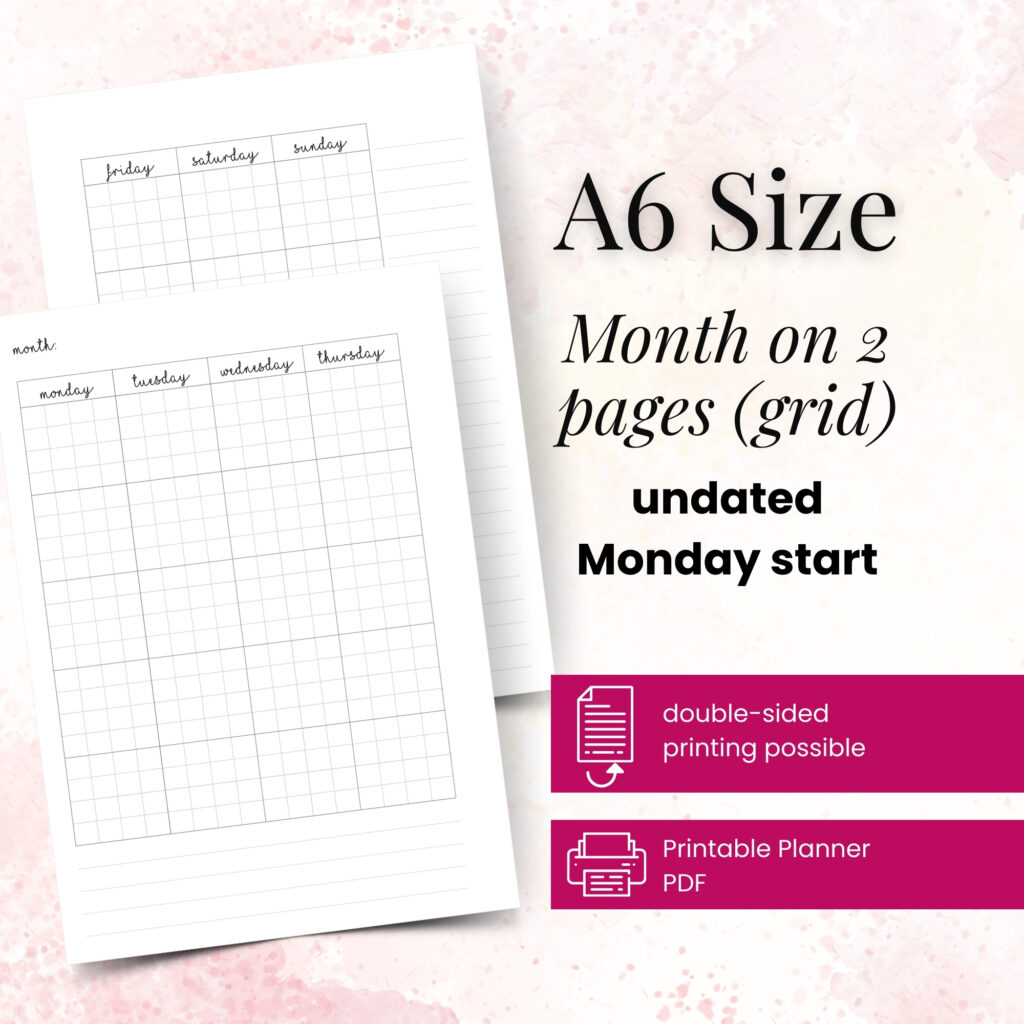
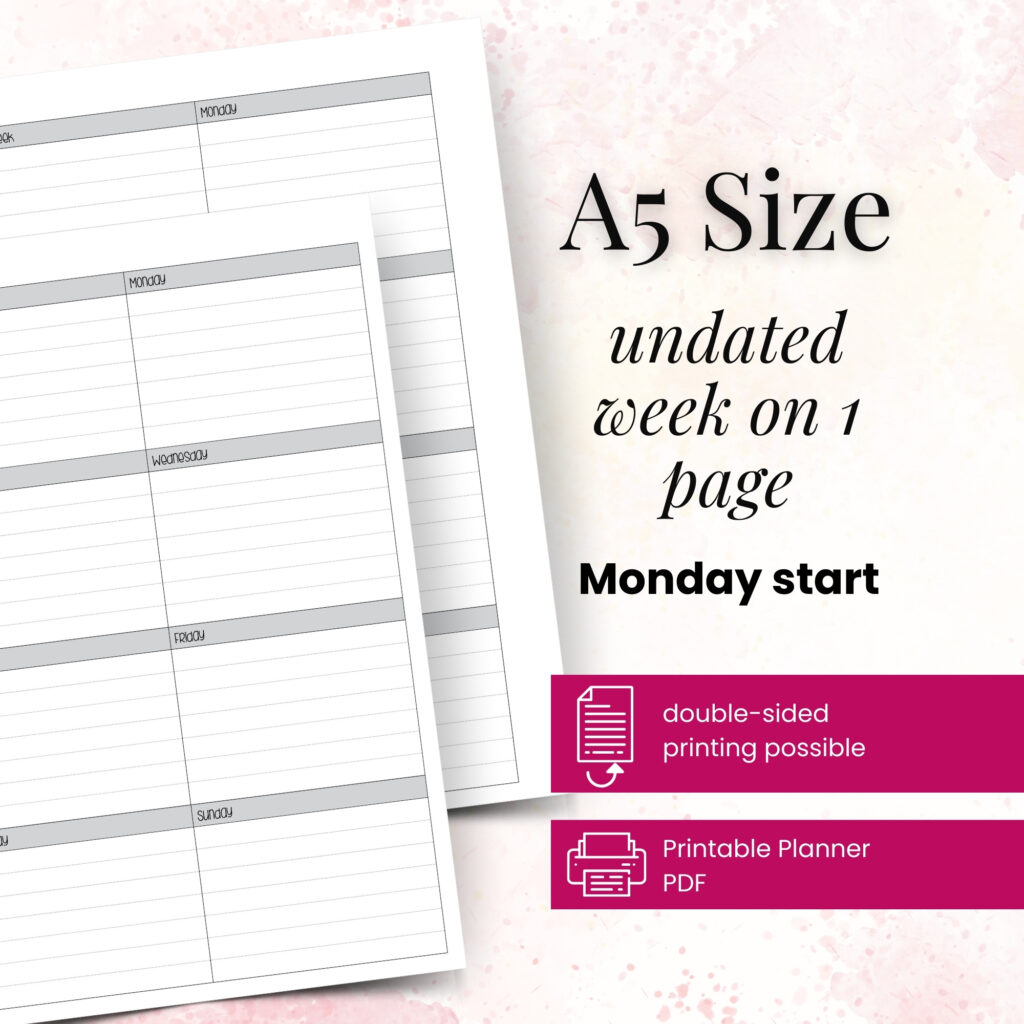
For many families, a monthly calendar and a weekly layout create the strongest foundation. Use the monthly view for dates that matter beyond this week, such as school breaks, birthdays, recurring bills, travel, and appointments. Then use your weekly pages for the details that need action: pickup times, meal ideas, work deadlines, errands, and tasks.
A vertical weekly layout works well if you think in time blocks. You can give each family member a column or divide the page into morning, afternoon, and evening. A horizontal layout can feel calmer if your days vary and you prefer a running list beside each date. Neither choice is more organized. The right one depends on how your brain spots priorities fastest.
Daily pages help when life gets especially full. Use them for appointment-heavy days, holiday preparation, work events, or a Monday that requires an hour-by-hour plan. You do not need a daily page for every date on the calendar. Printing them only when you need them saves paper and keeps your rings from feeling overstuffed.
Create Sections That Reduce Mental Clutter
A busy-mom planner works best when it separates planning from collecting information. Think of the front section as your command center and the back section as your helpful storage space.
Keep your calendar and current weekly pages at the front. Behind them, add sections that support the routines you repeat. A practical setup may include family, home, meals, work, and personal. You can also combine categories if fewer sections help you stay focused.
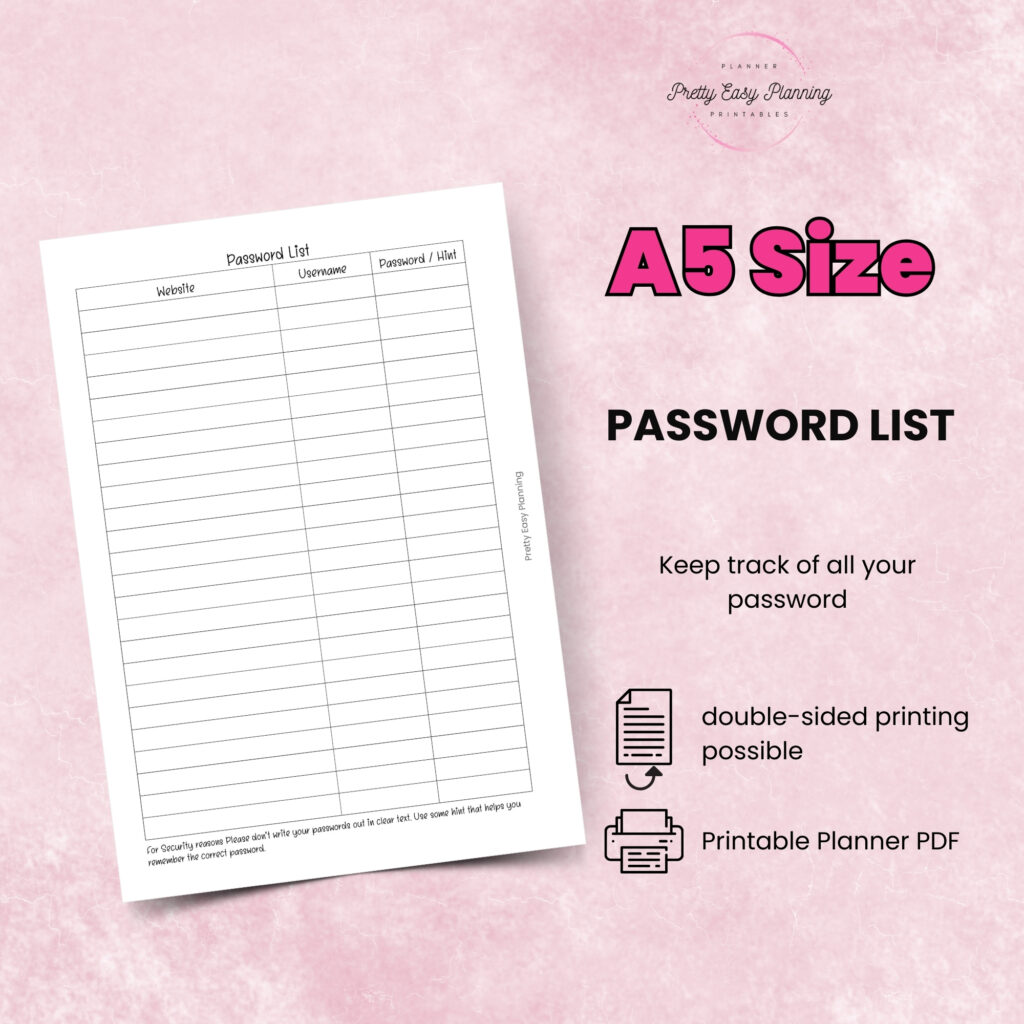
In your family section, keep school contacts, activity details, packing lists, and questions to ask at the next appointment. Your home section can hold cleaning routines, repair notes, seasonal checklists, and a running shopping list. A meal-planning page can reduce the familiar 4 p.m. question of what everyone will eat, even if you plan only three dinners at a time.
Your personal section matters too. Add a goal page, reading list, habit tracker, or a simple notes sheet for thoughts that deserve more than the back of an envelope. Caring for your family takes energy. A planner should make room for your life, not just everyone else’s.
Use a Weekly Reset You Can Finish
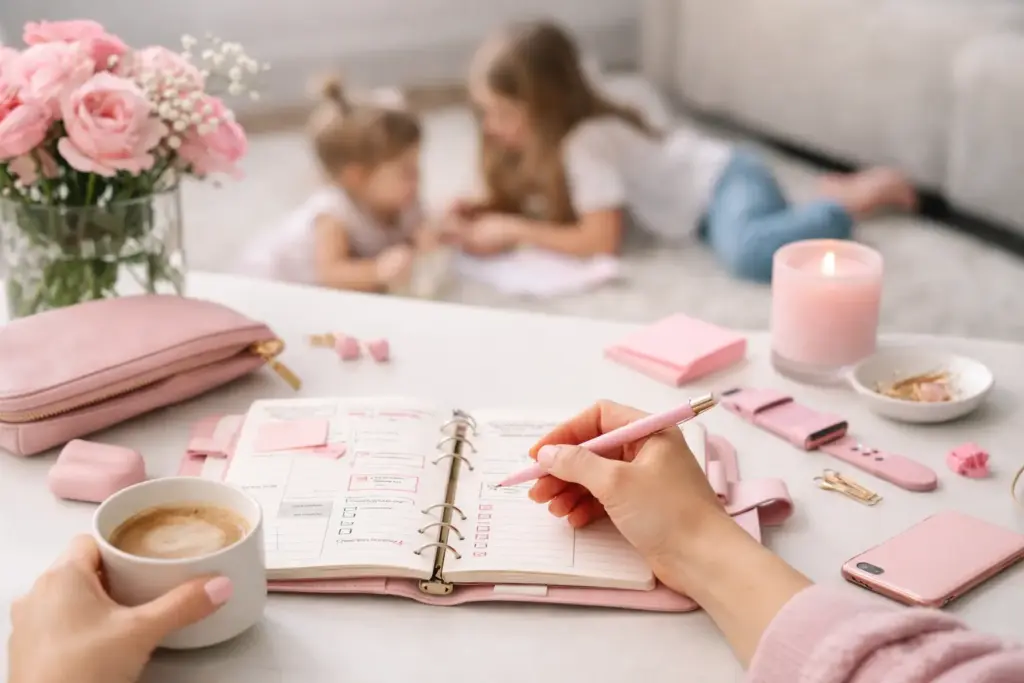
A planner only helps when you return to it. Instead of setting up a long Sunday ritual that feels impossible after a packed weekend, create a short weekly reset. Give yourself 10 to 15 minutes with your planner, your calendar, and a drink you enjoy.
First, check the next two weeks for appointments, school events, and deadlines. Then move any unfinished tasks forward with intention. Do not automatically rewrite every item. Ask whether it still matters, whether someone else can handle it, or whether you can cross it off completely.
After that, add the basics that make the week easier: meal ideas, a short grocery list, and the few tasks that will make the biggest difference. Finally, look at each day and notice pressure points. If Wednesday includes an early meeting, a dentist appointment, and practice across town, write a quick prep task on Tuesday. Small planning moves protect your future self.
Make Paper Planning Work in the Messy Moments
A beautiful planner can encourage you to open it, but it must also survive real use. Leave blank space. Keep a few notes pages near the front for phone calls, sudden reminders, and lists that do not belong anywhere else yet. Add a dashboard or divider so you can turn to the current week without searching.
You also need a capture habit. When someone tells you about a schedule change, write it down immediately on a notes page or directly on the right date. You can sort it later during your weekly reset. Trying to remember it until you get home creates more mental clutter than a slightly imperfect page ever will.
Color can help, but use it with restraint. Assign one color to family appointments, another to work, and perhaps a third to personal commitments if visual cues make your schedule easier to scan. If colors turn planning into a project, skip them. Clear writing and a consistent home for information do more for organization than an elaborate pen collection.
Let Your Inserts Change With Your Season
Pre-printed planners often force you to use the same layout through every season of the year. Printable inserts give you a more flexible option. You can print extra daily pages during back-to-school season, add meal pages during a busy sports schedule, or use more notes pages while planning a move.
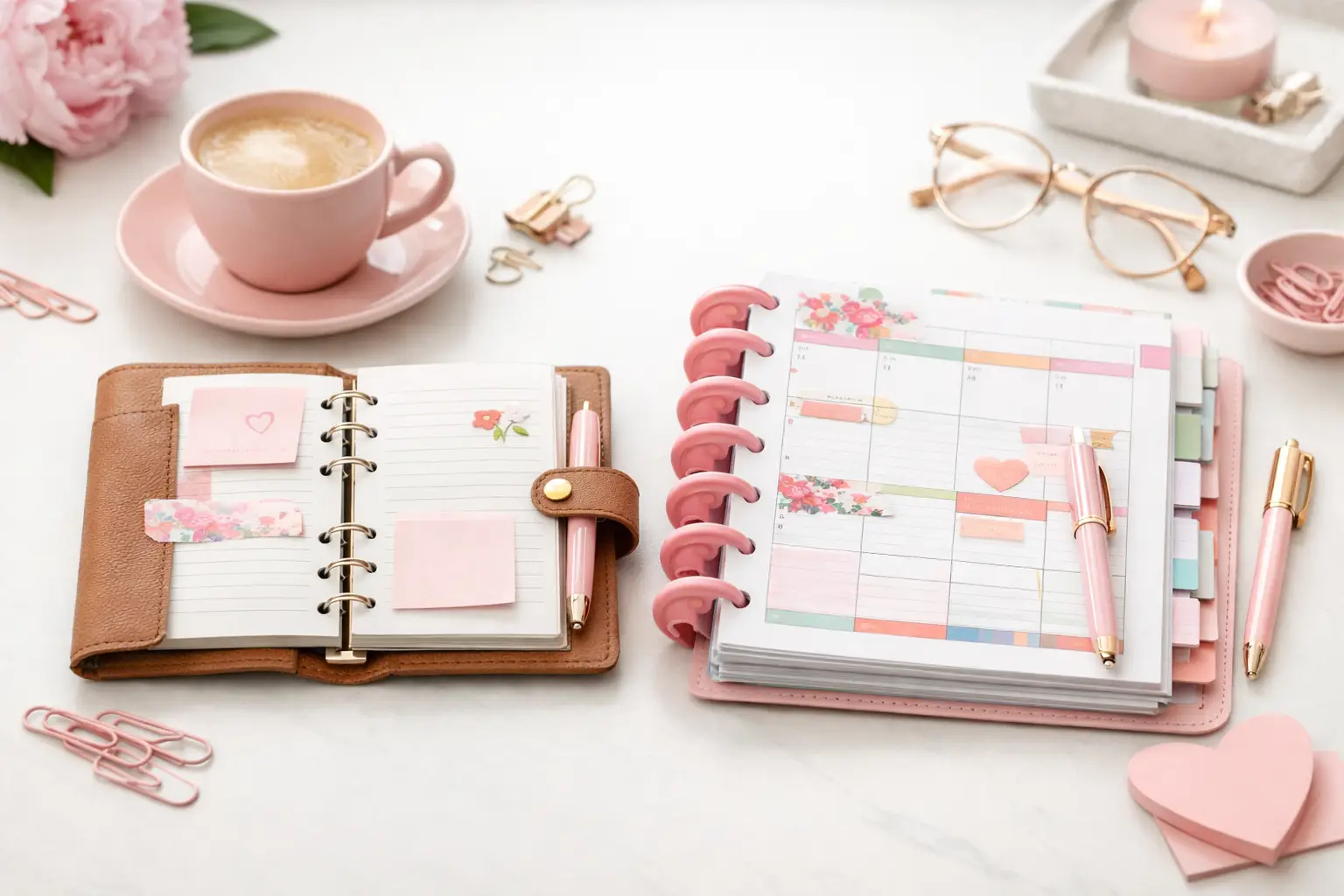
This flexibility also helps when your planner size changes. An A5 planner offers plenty of writing space for a family command center at home. A6 or Personal can work beautifully as a portable planner for appointments and errands. Personal Wide gives you more room for weekly planning without the bulk of a larger binder, while Happy Planner Classic suits those who prefer a discbound setup. The best size depends on whether your planner lives on your desk, in your tote, or beside the coffee maker.
At Pretty Easy Planning, creator-tested printable pages make it easier to build around your routines instead of settling for layouts that almost fit. Print only the pages you need, choose paper that feels good to write on, and reprint your favorite formats when they earn a permanent place in your system.
Give Yourself Permission to Edit
A planner system should evolve. If you stopped using a tracker, remove it. If a meal page sits empty but a master grocery list saves your week, keep the list and let the meal page go. Planning works best when it responds to your habits rather than judging them.
Try one new insert at a time and test it for two or three weeks. Notice whether it helps you make decisions, remember commitments, or feel less rushed. If it does, keep it. If not, you have learned something useful about how you plan.
Your successful planning story begins with a single print and one page that makes tomorrow easier. Start there, then build the planner that supports the life you actually lead.