You can love a layout and still end up with the wrong planner size. That is usually what happens with a6 vs personal size. On paper, they look close enough to compare in the same breath. In real life, they feel different in your hand, fit pages differently on rings, and change how much writing space you actually get every day.
If you are choosing between them, the best answer is not which one is better. It is which one makes planning feel easier for your life. Your successful planning story begins with a single print, but the size you print matters more than most people expect.
Key Takeaways
-
A6 and Personal are similar in overall scale, but they are not interchangeable sizes.
-
A6 gives you a wider page shape, while Personal is narrower and taller.
-
Personal usually works in ring planners, which means punched holes affect usable writing space.
-
A6 often feels cleaner and roomier for writing, especially with inserts that need boxes or sections.
-
Personal can be a great fit if you want a compact ring planner with plenty of accessories.
-
The right choice depends on how you plan, what binder you use, and how much writing room you want.
A6 vs Personal Size: the actual difference
Let’s start with the simple part. A6 paper measures 105 x 148 mm. Personal size inserts usually measure about 95 x 171 mm. So A6 is wider, while Personal is taller.
That shape difference changes more than the numbers suggest. A6 gives you a page that feels balanced, almost like a small notebook page. Personal feels slimmer and more vertical. Some people love that elegant narrow look. Others find it cramped, especially when they use inserts with columns, trackers, or divided sections.
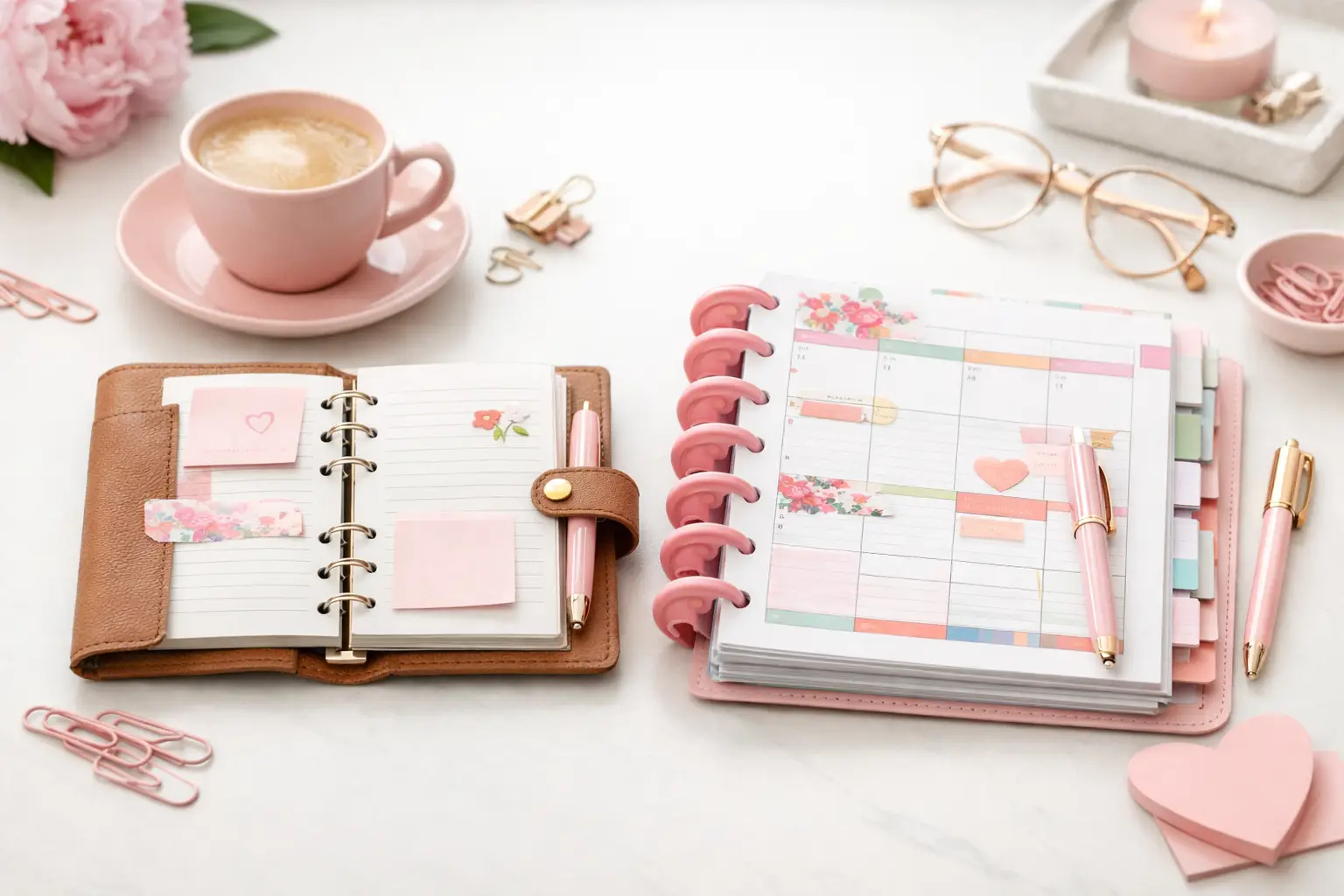
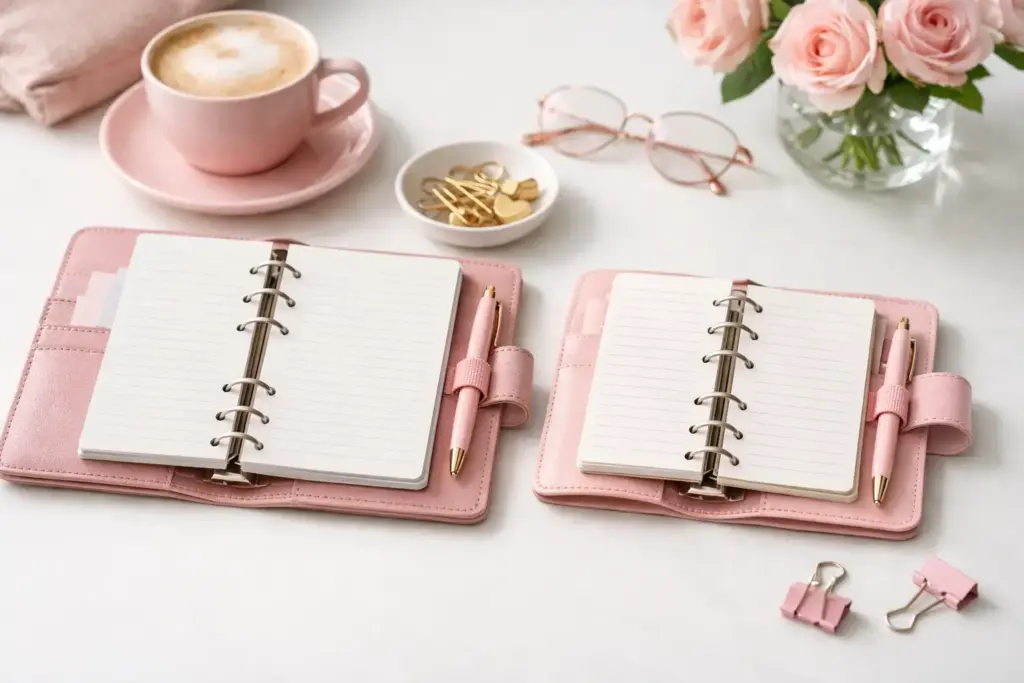
The other big difference is the planner setup. A6 can appear in bound formats, discs, or rings, depending on your planner style. Personal size is most strongly tied to ring planners. That matters because rings and hole punches take up space near the edge of the page. Even when the insert size looks workable, the writing area can feel tighter than expected.
Why A6 often feels bigger than it looks
This is where many planner shoppers get surprised. Personal pages are taller, but they do not always feel more spacious. Because the page is narrow, your lines get shorter. If you write medium or large, you may wrap to a new line sooner than you want.
A6 gives you more width, and that width is useful. Weekly inserts feel less pinched. Daily pages have more room for appointments, lists, and notes. If you like decorative planning, that extra width also gives you better balance for stickers, highlights, or little design touches without crowding your writing.
For many people, A6 hits a sweet spot. It stays portable, but it does not force every layout into a tall skinny shape. That can make a huge difference if you want your planner to feel functional first and pretty second.
When Personal size makes more sense
Personal still has plenty going for it. If you love classic ring planners, Personal is one of the most established formats out there. Covers, dashboards, dividers, pockets, and accessories are widely available. If building a ring system is part of the fun for you, Personal opens up a very familiar creative corner of planning possibilities.
The slim page shape can also work beautifully for certain planning styles. If you mostly keep short task lists, brief appointments, meal plans, or on-the-go notes, Personal can feel compact and efficient. It slips easily into many bags, and some people find the taller page more natural for vertical planning.
Personal can also be a strong choice if your planner acts more like a portable dashboard than a full writing workspace. In that case, you may not need broad daily pages. You just need enough room to keep your essentials visible and organized.
A6 vs Personal size for common insert types
Not every insert behaves the same way in each format. That is why size choice should always connect back to what you actually print and use.
Daily inserts
If you like detailed daily pages with schedules, priorities, notes, and habit tracking, A6 usually feels more comfortable. The wider page gives each section room to breathe.
Personal daily inserts can still work well, especially if the design is clean and streamlined. But if you tend to overstuff your days with tasks or write long notes, Personal may feel tight fast.
Weekly inserts
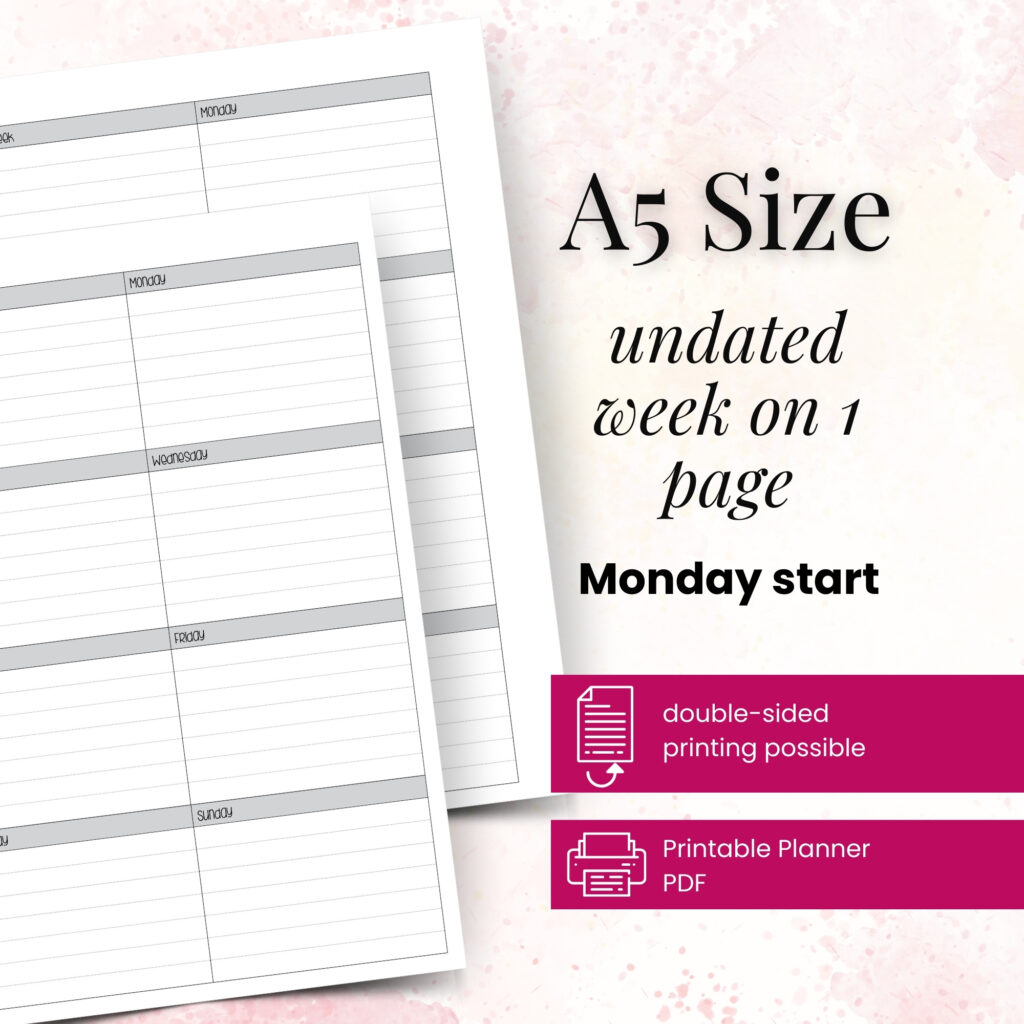
Weekly layouts reveal the shape difference immediately. Horizontal weeklies often feel more natural on A6 because each day gets a little more width. That helps if you write more than a few words per day.
On Personal, vertical or list-based weekly layouts often perform better than wide horizontal boxes. The narrow page shape supports stacked planning better than spread-out planning.
Notes and lists
Both sizes handle notes well, but the experience differs. A6 feels better for brainstorming, meeting notes, journaling, or list-making with longer phrases. Personal works nicely for quick capture pages, shopping lists, routines, and reference notes.
Monthly inserts
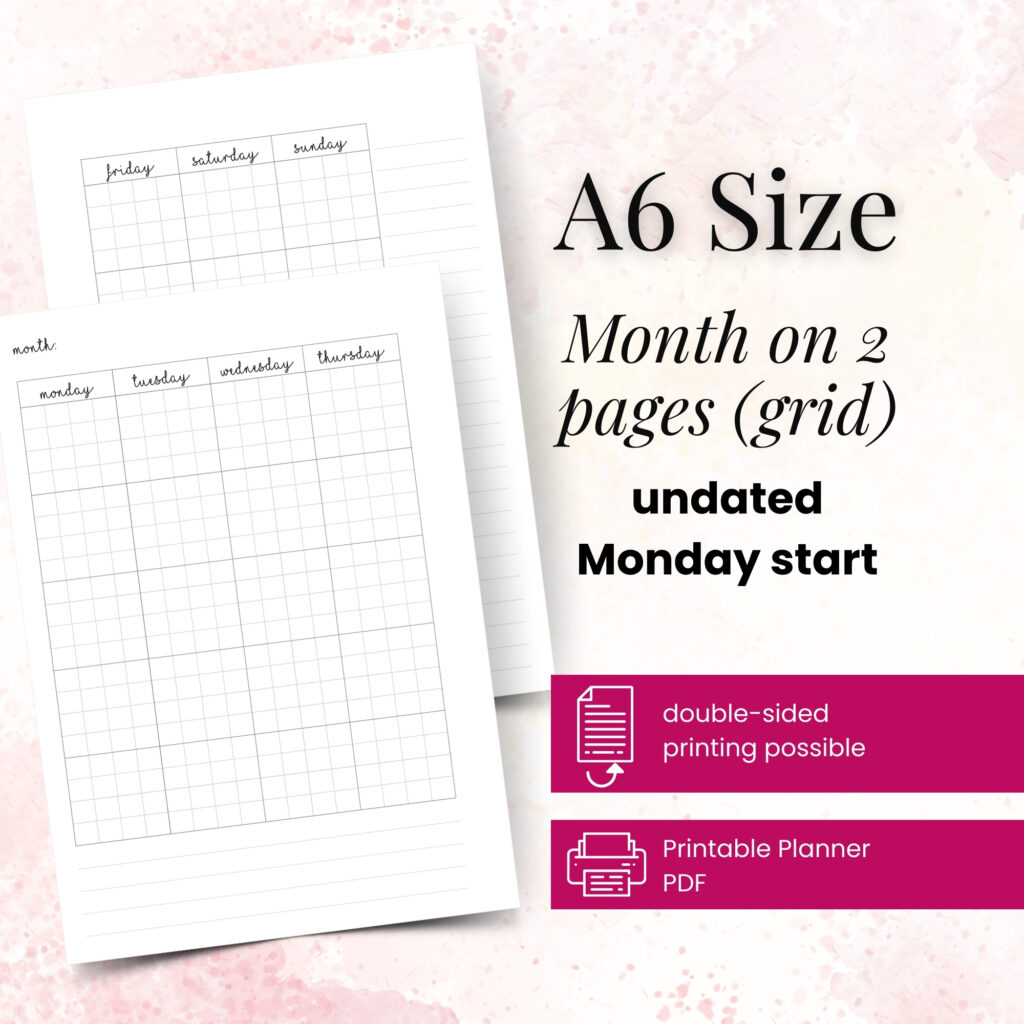
Monthly views can feel small in either size, since both are compact formats. If your monthly spread is mostly for key dates and light planning, either one can work. If you want larger monthly boxes, A6 usually gives you a bit more comfort.
Binder bulk and portability
This part matters more than people think. The page size is only one piece of the puzzle. The binder itself changes how portable your planner feels.
Personal ring planners can become bulky, especially if you add dashboards, pockets, and decorative layers. Even though the inserts are compact, the full setup may not feel especially light. If you carry your planner everywhere, that bulk can matter.
A6 ring planners can also get chunky, of course. But if you use A6 in a simpler setup, it can feel neat and efficient while still giving you a more generous page. If you want the smallest possible ring setup, Personal may still win. If you want better writing comfort without jumping to a larger planner, A6 often feels like the better compromise.
Printing and layout fit
For printable inserts, size accuracy matters. A6 and Personal are not close enough to swap casually. If you print A6 pages for a Personal planner, they will not fit correctly. If you print Personal inserts for A6, the proportions will be off.
This sounds obvious, but it comes up all the time because the two sizes sit in a similar category of compact planning. The smart move is to choose your planner cover or binder first, then print specifically for that format.
This is also where tested layouts matter. A layout that looks fine on screen can feel cramped once printed in a narrow format. Well-designed inserts account for margins, punch space, and real writing behavior. That is one reason planner users often stick with shops that understand how each size actually functions in everyday use.
So which one should you choose?
If you want more writing room, a balanced page shape, and inserts that feel a little easier to use across daily and weekly formats, A6 is often the safer pick. It gives you flexibility without getting too large.
If you love ring planners, want a classic compact setup, and prefer short-form planning over long writing sessions, Personal may suit you better. It has a distinct feel, and for the right planning style, it works beautifully.
If you are still torn, think about your last few weeks. Did you wish for more space to write? Did your planner pages feel squeezed? Did your lists spill into the margins? If yes, lean toward A6. If you mostly write quick entries and care more about compact carry than spacious layouts, lean toward Personal.
There is no gold star for choosing the most popular size. The best planner is the one you actually enjoy opening and using.
A6 vs Personal size: the honest verdict
A6 usually wins for writing comfort. Personal usually wins for classic ring-planner charm and compact structure. Neither one is wrong, but they support slightly different planning habits.
At Pretty Easy Planning, that is always the heart of the decision. A planner should work with your routine, not force you to shrink your plans to fit the page. When your inserts match your real life, planning feels less like maintenance and more like momentum.
Pick the size that gives your thoughts enough room to land. Once that part feels right, the rest of your system gets much easier to build.